7 Reasons "I'm Fine" Is the Most Dangerous Thing You Can Say on a Blood Thinner
From the paramedic who has knelt over women saying it. Twelve years, and not once has it been information.
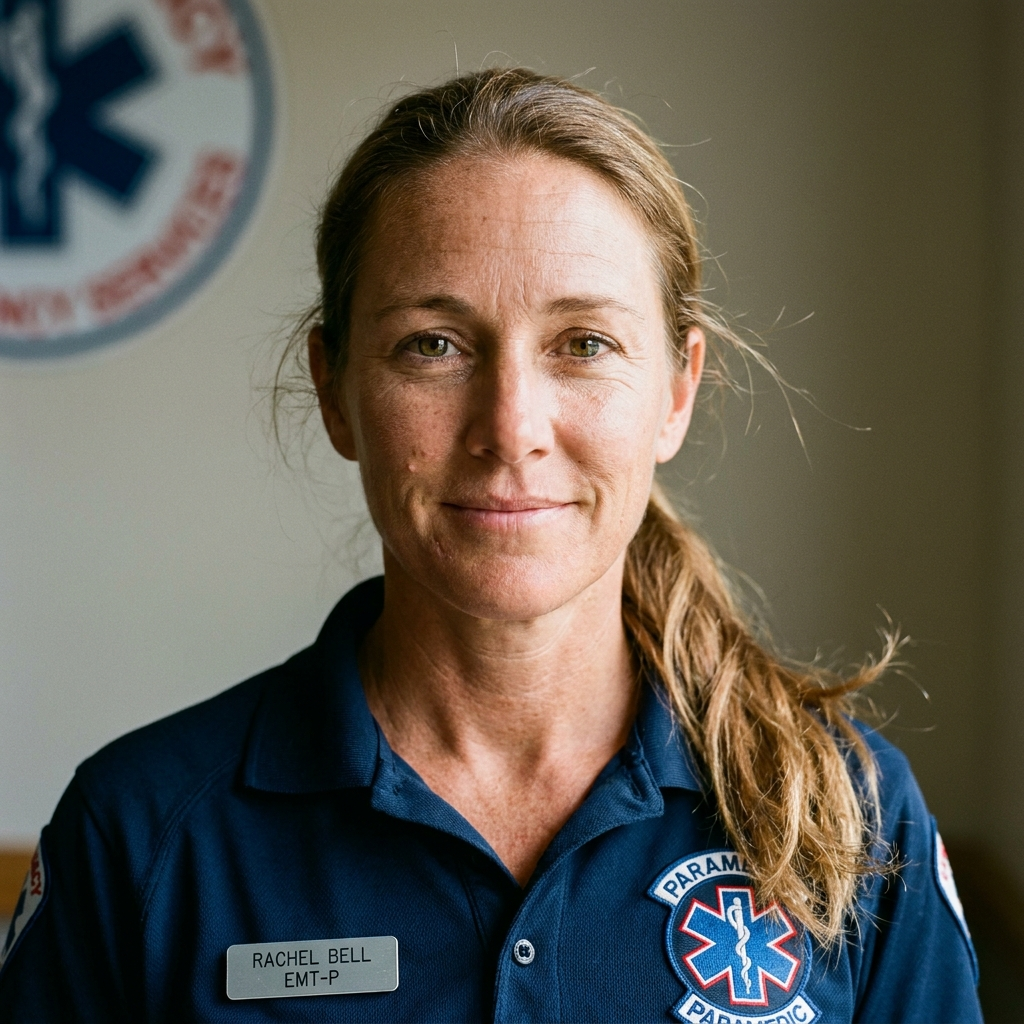
She said it three times. Once when we came through the door, once while my partner cut the cardigan away, and once more on the way to the truck. "I'm fine." She was not fine. She was on a blood thinner, she had gone down in her own kitchen, and the only thing in that house telling us so was on her wrist.
I want to be precise about why that matters, because it is not the fall. On a blood thinner a bleed does not announce itself. It runs quietly under a scalp that looks completely normal. The first drug we give and the hospital we drive to are both decided in about sixty seconds, off what we can see on your body. Get that wrong and we make it worse.
You will not be able to correct us. Not because you are unconscious, necessarily. Because "I'm fine" is a reflex you have run your whole life, and a concussion does not stop you saying it. It just stops it being true.
17,000+ women on blood thinners wear one daily.
1. They check your wrist before they ask your name.
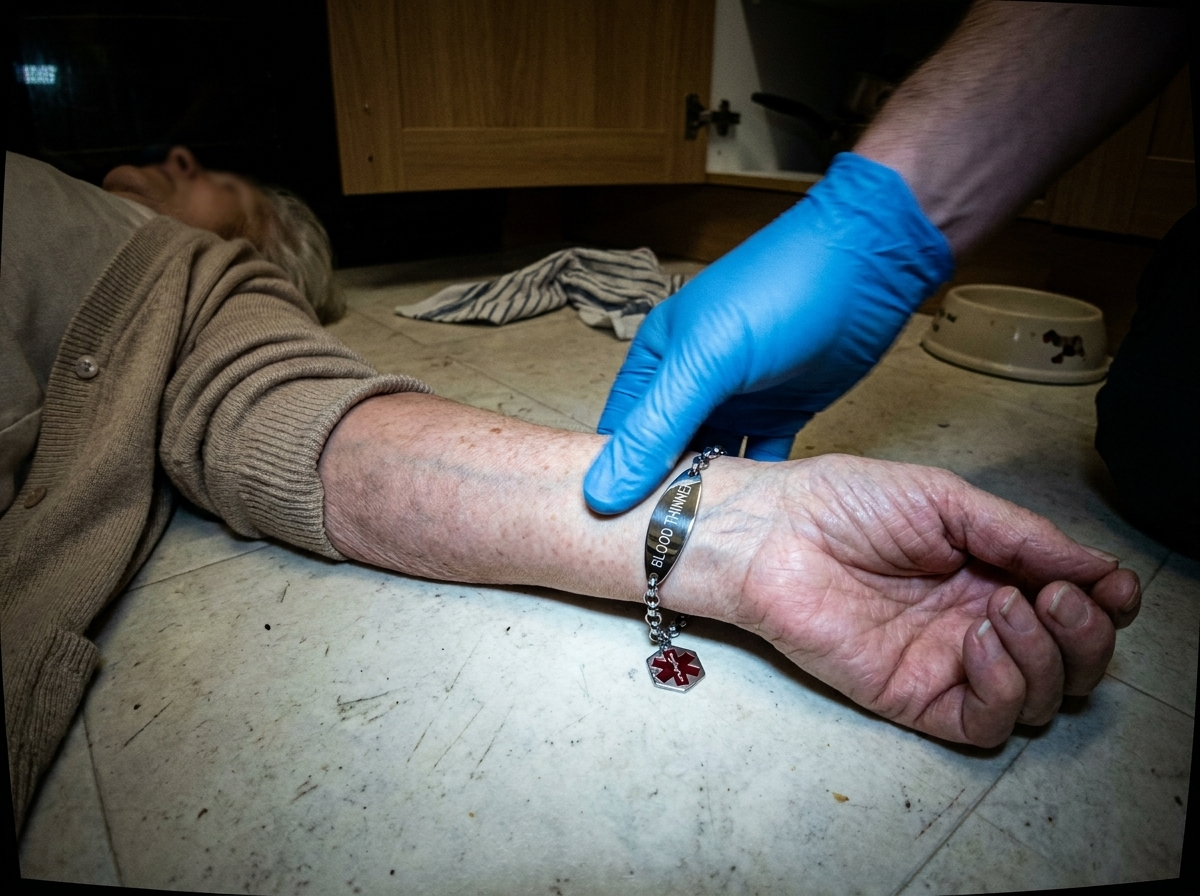
Every crew in the country is trained the same way, and it is not a search. It is a sweep, and it runs in a fixed order: airway, pulse, wrist. My hand is on your radial pulse within the first few seconds of reaching you, which means your wrist is already in my hand before I have asked your name, before your eyes open, and long before anyone thinks about a purse.
That is the whole reason this works. It does not ask you to be conscious, or to remember anything, or to have told the right person in advance. The information is simply already in the place my hand was going anyway. A card in a wallet needs someone to go looking. Nobody goes looking in the first minute.
👉 See what a crew actually reads in the first sixty seconds →
Which raises the harder question: if your wrist is already in my hand, why isn't what you say enough?
2. "I'm fine" is a reflex, not a report.
Here is what nobody explains. A head injury on an anticoagulant can leave you talking normally. Answering questions. Insisting, quite firmly, that you do not need a fuss. Lucidity is not the same as being uninjured, and on a blood thinner the gap between the two can be forty minutes wide. I have had women argue with me the whole way to the truck and go quiet in the ambulance.
So when you say you are fine, I do not get information. I get a sentence you have said your entire life, in exactly the tone you have always said it. The bracelet does not argue with you. It just adds the one fact you would have given me if you had known to.
👉 Read why the first drug is the one that matters →
And if we get that fact late, the thing we do first is the thing that hurts you.
3. The wrong first drug makes the bleeding worse.
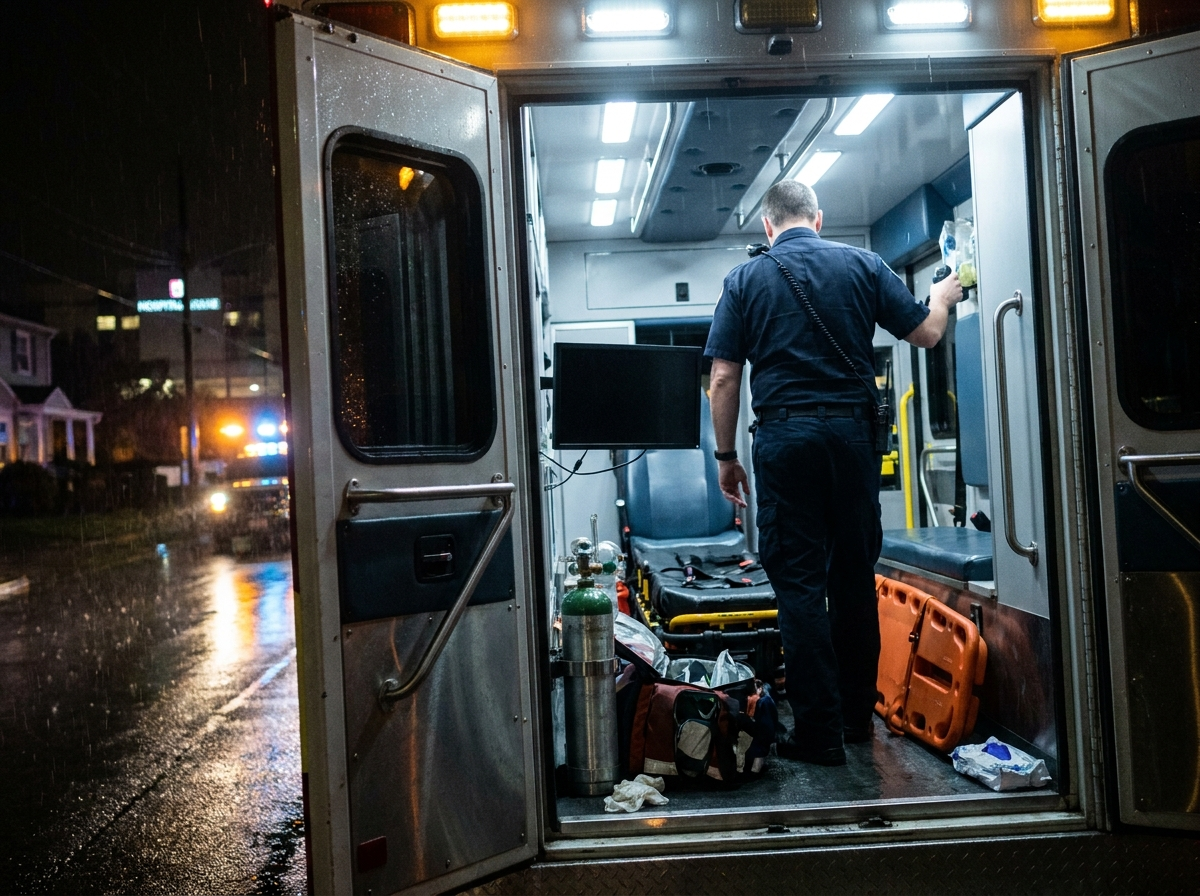
On a blood thinner, some of what we would normally reach for stops being neutral and starts being harmful. The clotting you need is the clotting your medication is deliberately preventing. Treated as an ordinary fall, an anticoagulated bleed gets worse while we are still being reassuring about it.
Every year 2.6 million people are treated wrong at the scene because nobody there knew about the anticoagulant. 250,000 of them die. Not from the fall. From the gap between the minute we arrive and the minute somebody finally finds out.
👉 See the decision that gets made before any drug at all →
Though the drug is not even the first thing we decide. The first thing we decide is where you are going.
4. "Trauma center, now" is decided at your kerb.
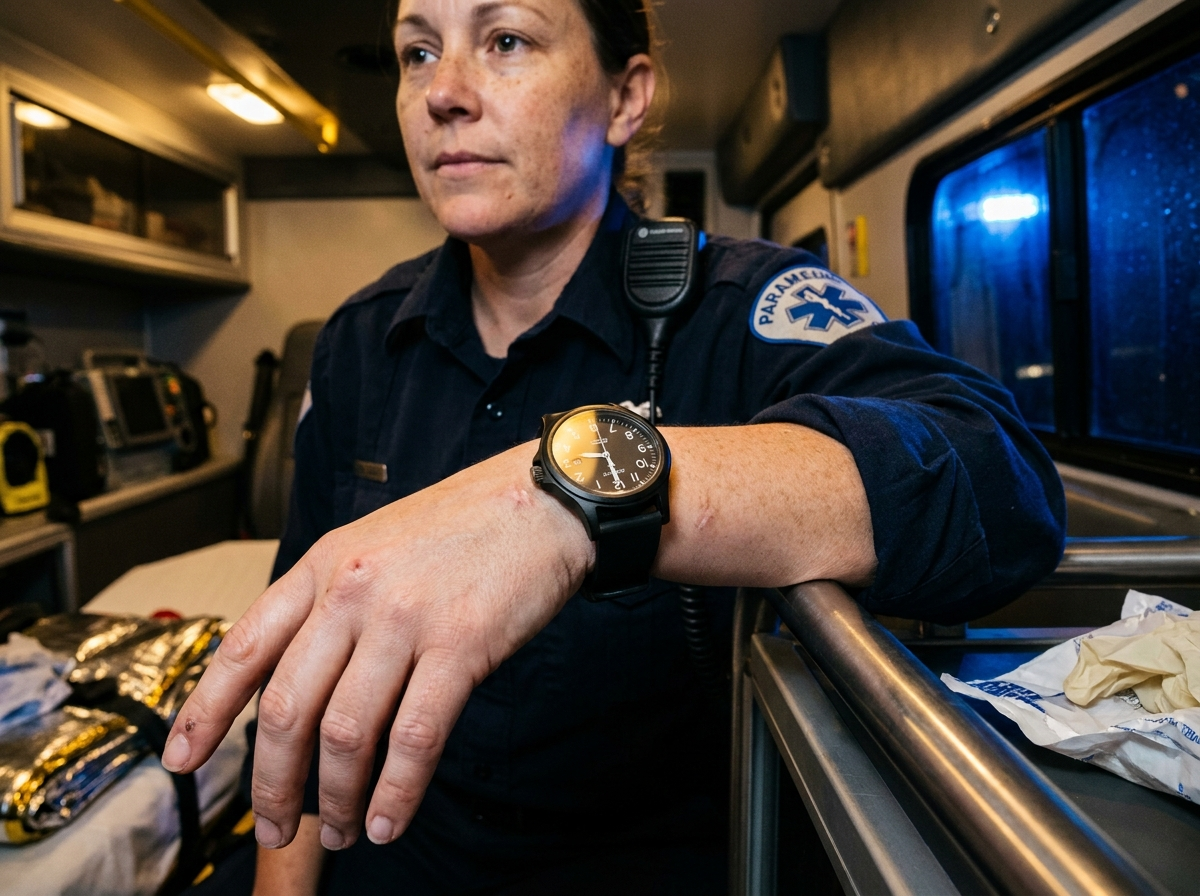
This is the part almost nobody knows. Before any treatment, we choose a destination, and the nearest hospital is often not the right one. An anticoagulated head bleed needs a centre with neurosurgery on site and imaging ready. Knowing you are on a blood thinner can change which building you are driven to, and that decision is made standing over you, in seconds.
Get routed to the closer hospital and the clock does not stop while you are transferred. It keeps running. The bracelet does not just change what goes into your arm. It changes the postcode you wake up in, which is a thing your wallet card, four hours later, cannot do anything about.
👉 See the bracelet the crews read →
All of which depends on one small thing: that it can actually be read, at a glance, in bad light.
Two Words. One Wrist.
The one fact they need, where they already look.
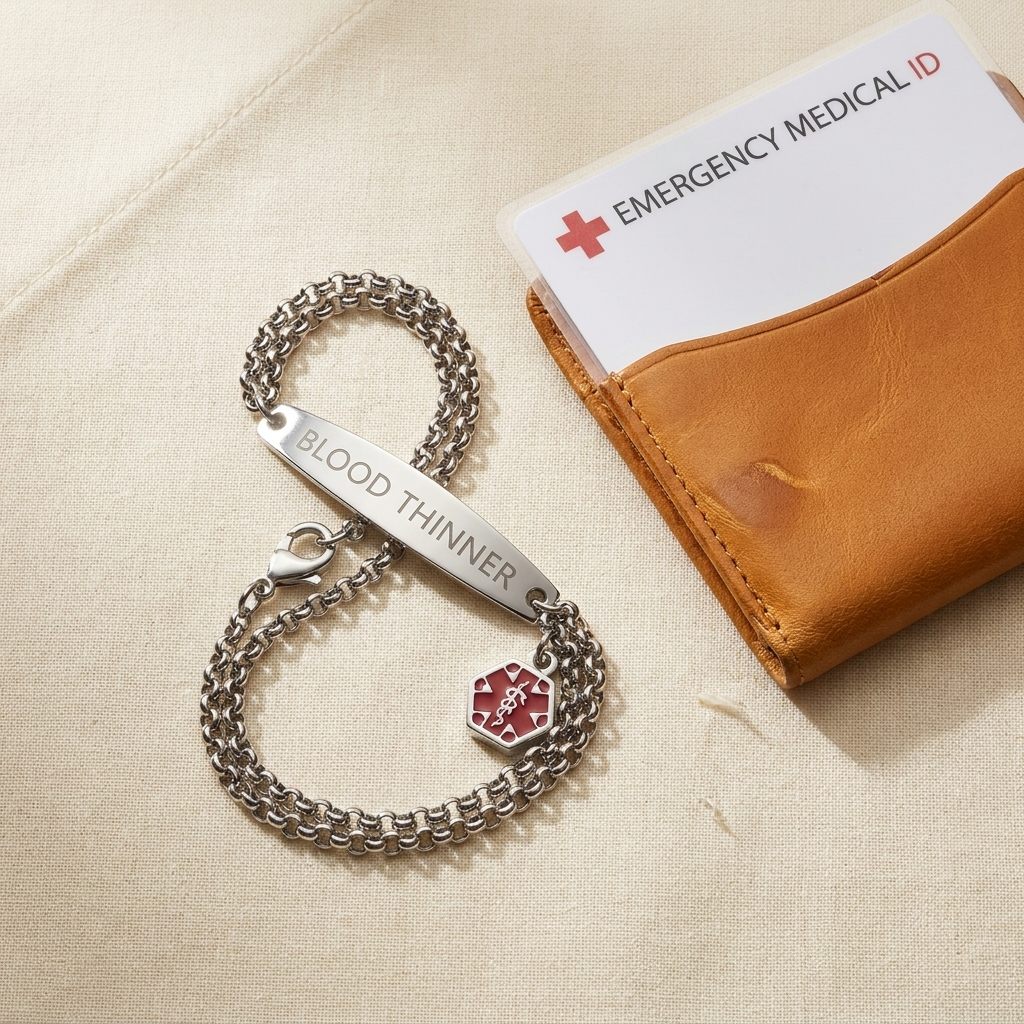
Surgical steel, engraved with the category rather than the drug name, so it stays true every time your cardiologist switches you. $24.99, with the Emergency ID Card and case included free.
GET MY WRIST-CHECK BRACELET →5. Two words, deep enough to read at a glance.
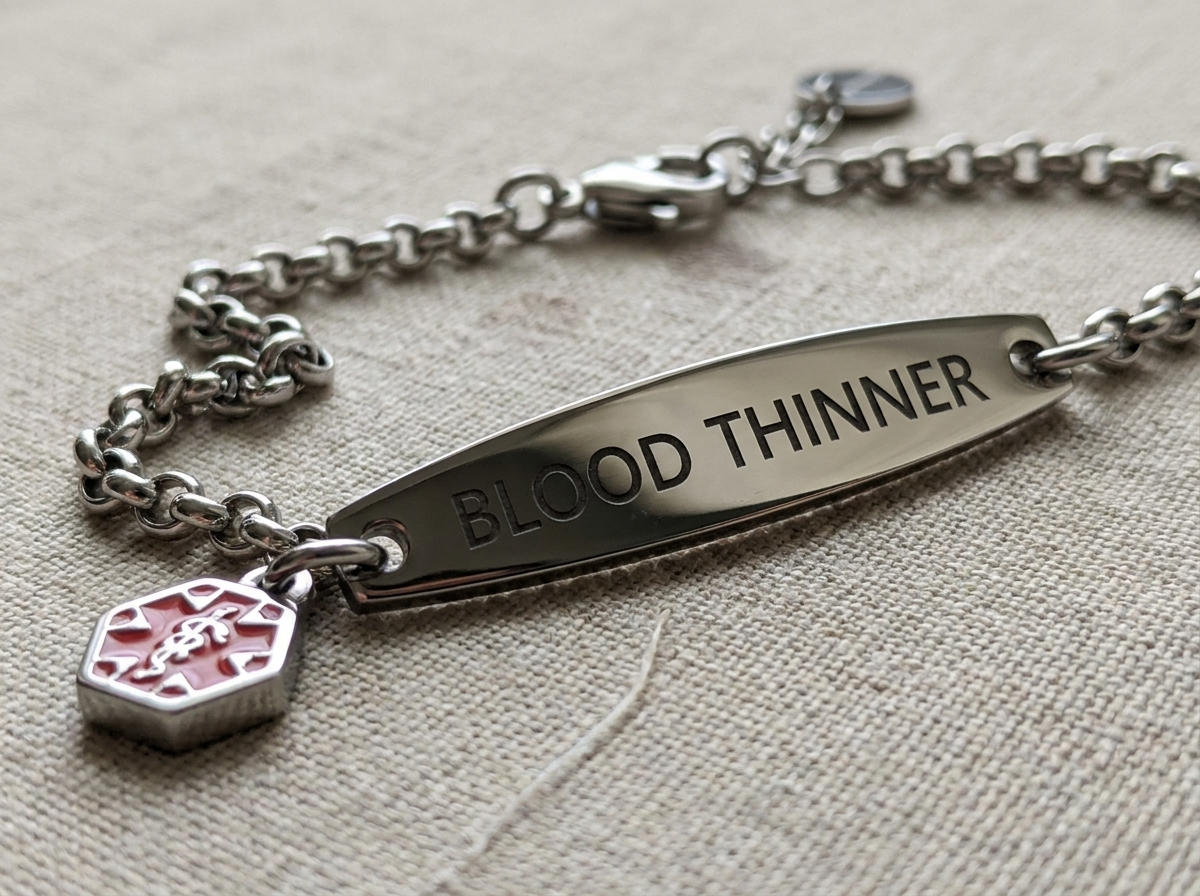
It says BLOOD THINNER. Not the brand name, the category, and that is deliberate: Eliquis, Xarelto, Warfarin, Pradaxa and Plavix all change what we do, and your prescription can change twice in a year without the bracelet ever becoming wrong. Two words is also all we have time to read.
The engraving is cut deep into the plate rather than printed on it, so it reads in a dark hallway, in the rain, upside down, and after three years of washing up. A nurse can take it off you in a second and it is still legible. There is no battery, no screen and nothing to charge.
Which leaves the objection I hear most, and it is never about the medicine.
6. You will get compliments, not questions.

The objection is never "I don't believe you." It is "I don't want to look like a patient." I understand it completely, and it is the reason most medical ID never gets worn. A red rubber band on your wrist tells every stranger in the supermarket something about you that is none of their business.
So this was built as jewellery that happens to be readable: polished steel, a rolo chain, a small Star of Life charm that means everything to a paramedic and reads as a detail to everyone else. The women who wear it report being asked where they got it, not what is wrong with them. That difference is why it stays on.
👉 See why it never comes off →
And staying on is the entire game, because you do not get to choose the morning.
7. It is already on, or it is not there.
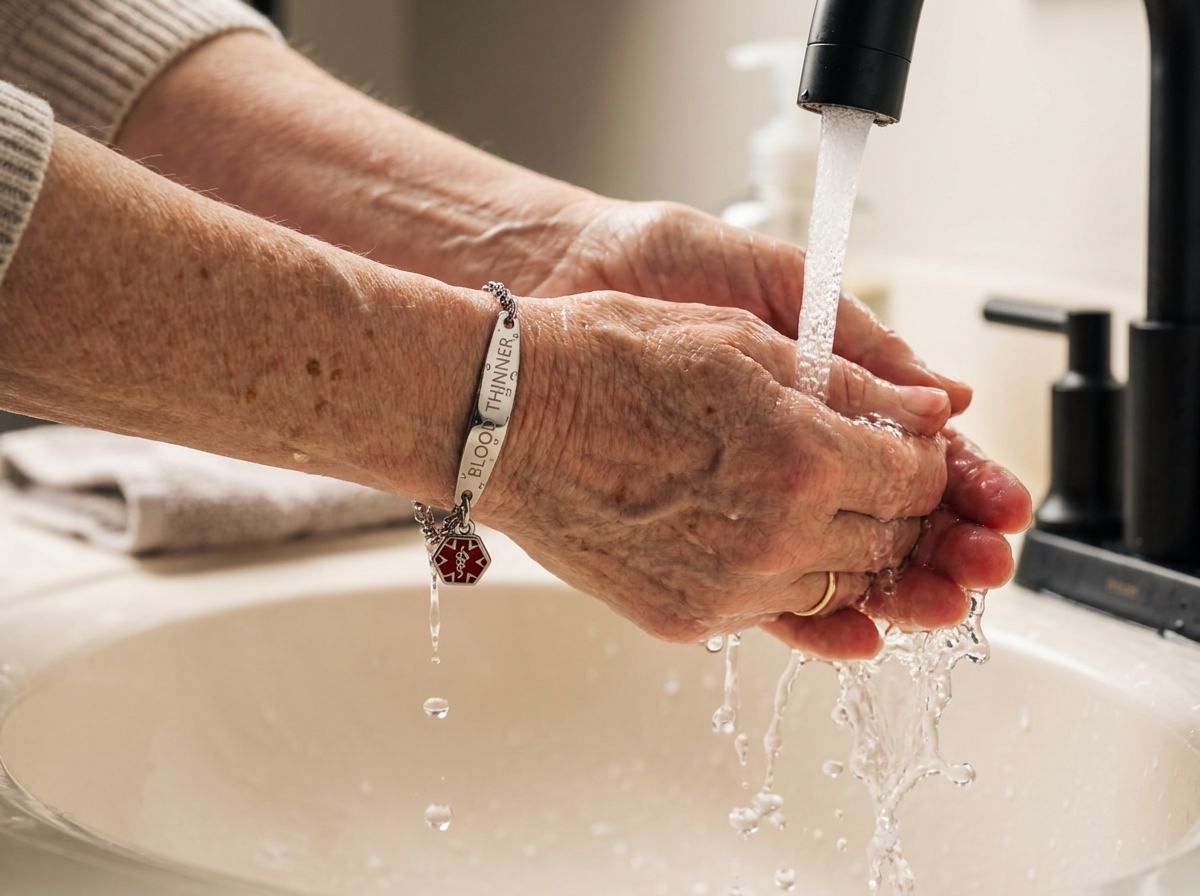
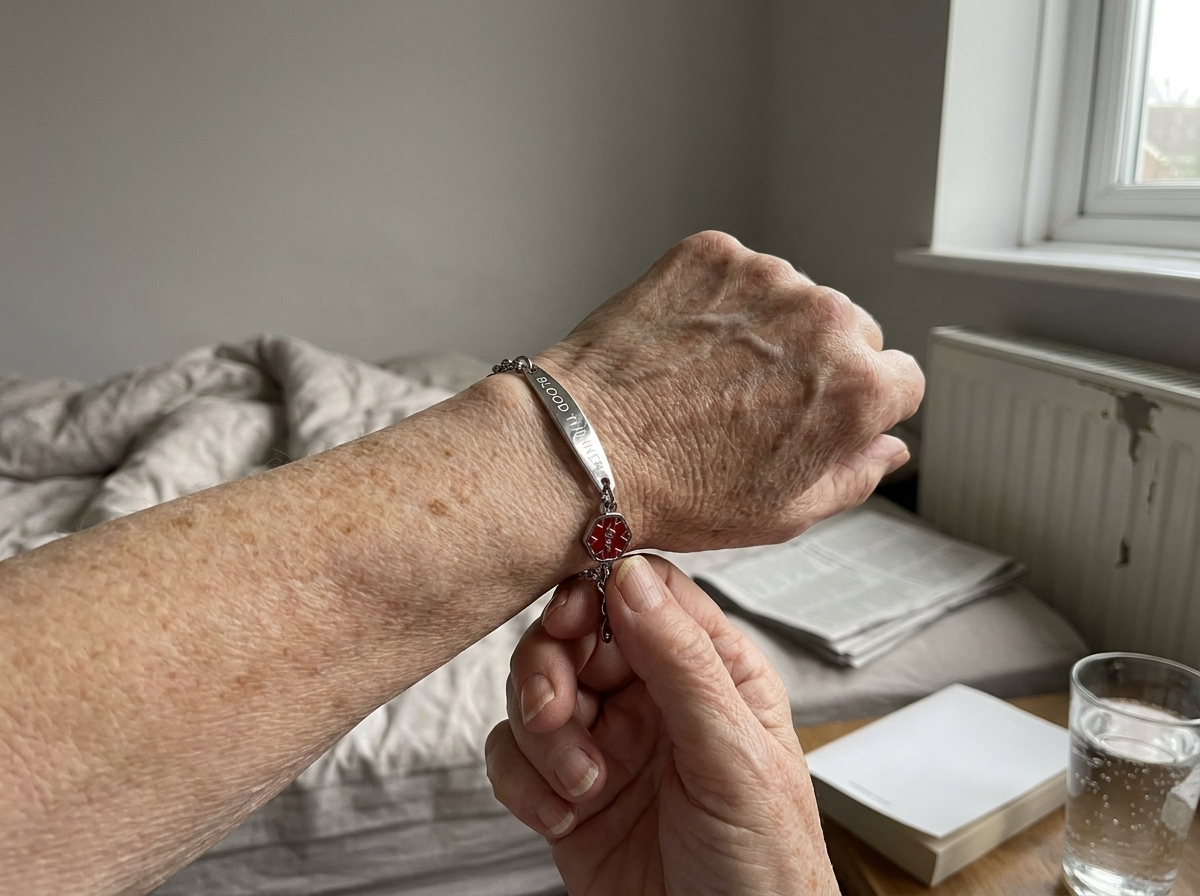
Everything I have described only works if the bracelet is on you at the moment it happens, and the moment is never convenient. It is six in the morning getting out of the bath. It is the second step of the stairs. A device you have to remember, charge, unlock or activate is a device that fails on exactly the day you needed it, because that day gives you no warning.
This one has no state. It does not need you awake, or dressed, or holding anything. It goes on in about ten seconds and then it is simply on, in the shower, in the garden, asleep. The only decision it ever asks you to make is the one you are making right now, and then it never asks again.
You have said you were fine your whole life. This is the one time something else should be doing the talking.
Two Free Gifts. Zero Risk. One Wrist.
316L surgical steel, laser-etched with the category so it stays accurate through every prescription change. Every bracelet ships with two free gifts: the Emergency ID Card that carries your specific medication name, and its protective case.
Wear it for 60 days. If it is not what I said it was, send it back for every penny and keep both gifts. The engraving carries a lifetime warranty, and the Lost-Bracelet Promise replaces it free in your first year. No questions, no proof required.
No subscription, ever. You will see the exact offer on the next page. This bracelet sold out six times last year.
Last Word
Flash Sale ends in 23:00
Say "I'm fine" all you like. Let this say the rest.
The two words that change the first drug and the hospital, sitting where every crew already looks. Do it while your Flash Sale is still open.
GET PROTECTED TODAY →