7 Things Nobody Tells You When They Put You on Eliquis
Starting with this one. Paramedics do not ask what you are taking. They treat.
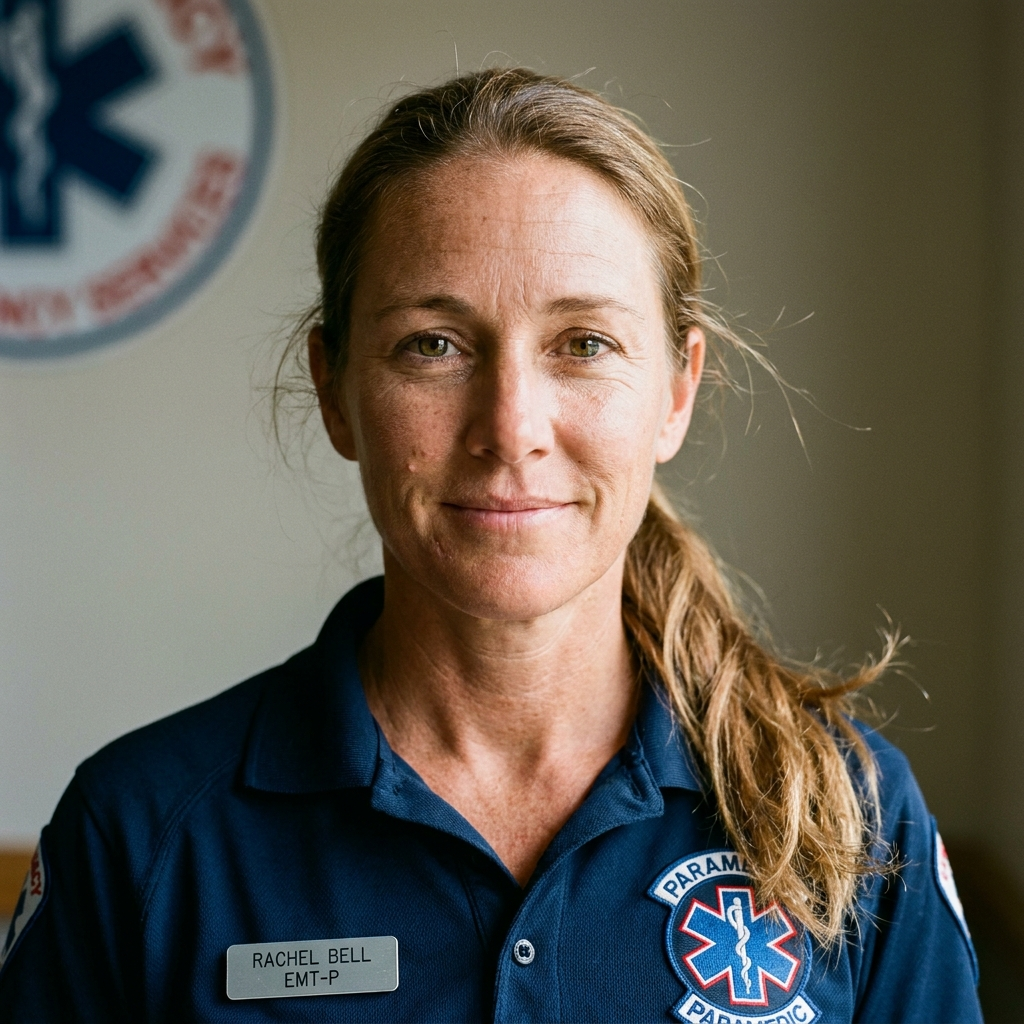
Most women on Eliquis are quietly counting on a moment that does not exist. The moment where somebody kneels down, asks what you take, and writes it on a clipboard. It is not part of the job. We arrive, we assess, and we begin treating.
That is not carelessness, it is the clock. Treatment decisions on a suspected bleed get made inside the first minute, and the only information available in that minute is whatever is physically on you. Not what you would have said. Not what is in your folder at home.
So the useful question is not "how do I tell them." It is "where does the answer have to be sitting, already, for it to be used." There is one honest answer to that, and it is the reason this page exists.
17,000+ women on blood thinners wear one daily.
1. They don't ask. They treat.
I want to be precise, because this is the part that surprises people. On arrival we are working a sequence: airway, breathing, circulation, and a rapid look for anything that changes what we do next. Questions are for people who can reliably answer them. If you are concussed, confused, or simply insisting you are fine, your answer is not something we can build a treatment on.
Family are often not there. When they are, they frequently do not know the drug name, only that there is "a blood thinner, one of the new ones." That is not enough to change a protocol. We act on what we can verify, and in the first minute the only verifiable thing is what is on your body.
👉 See exactly where we look, and in what order →
Which raises the only question that matters. Where does a stranger's hand go first?
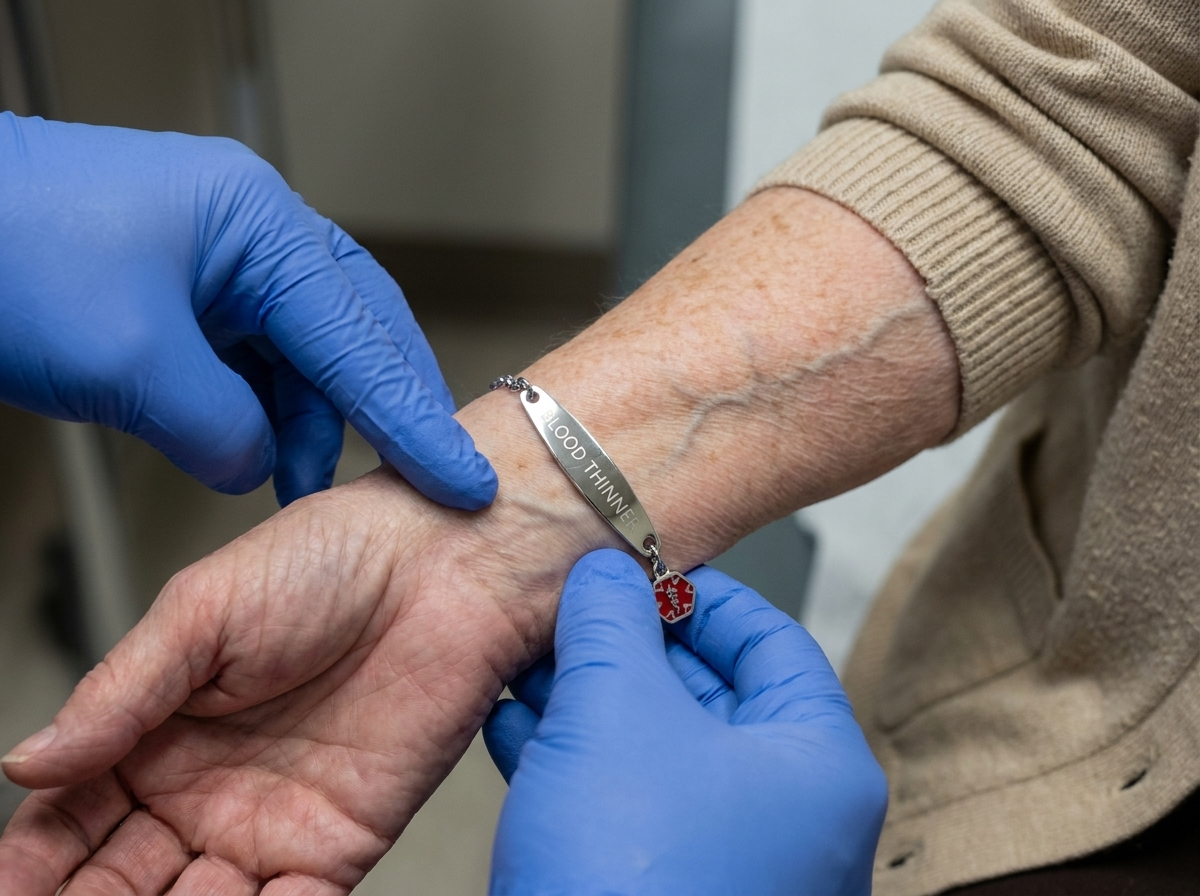
2. The wrist is the first place they look.

The wrist is not a hopeful guess, it is where the radial pulse is. Your wrist is in a stranger's hand within seconds of them reaching you, every time, in every service. That is why medical ID has been worn there for sixty years and why crews are trained to register it without being told to look.
Compare that with the alternatives on their own terms. A purse is usually in another room. A wallet card gets found in the ER at about minute five. A phone stays locked. None of them are bad ideas. They are simply in places nobody is standing in during the minute that counts.
👉 See what the wrong call actually does →
And on an anticoagulant, the wrong call is not a neutral mistake.
3. On Eliquis, the wrong call makes it worse.
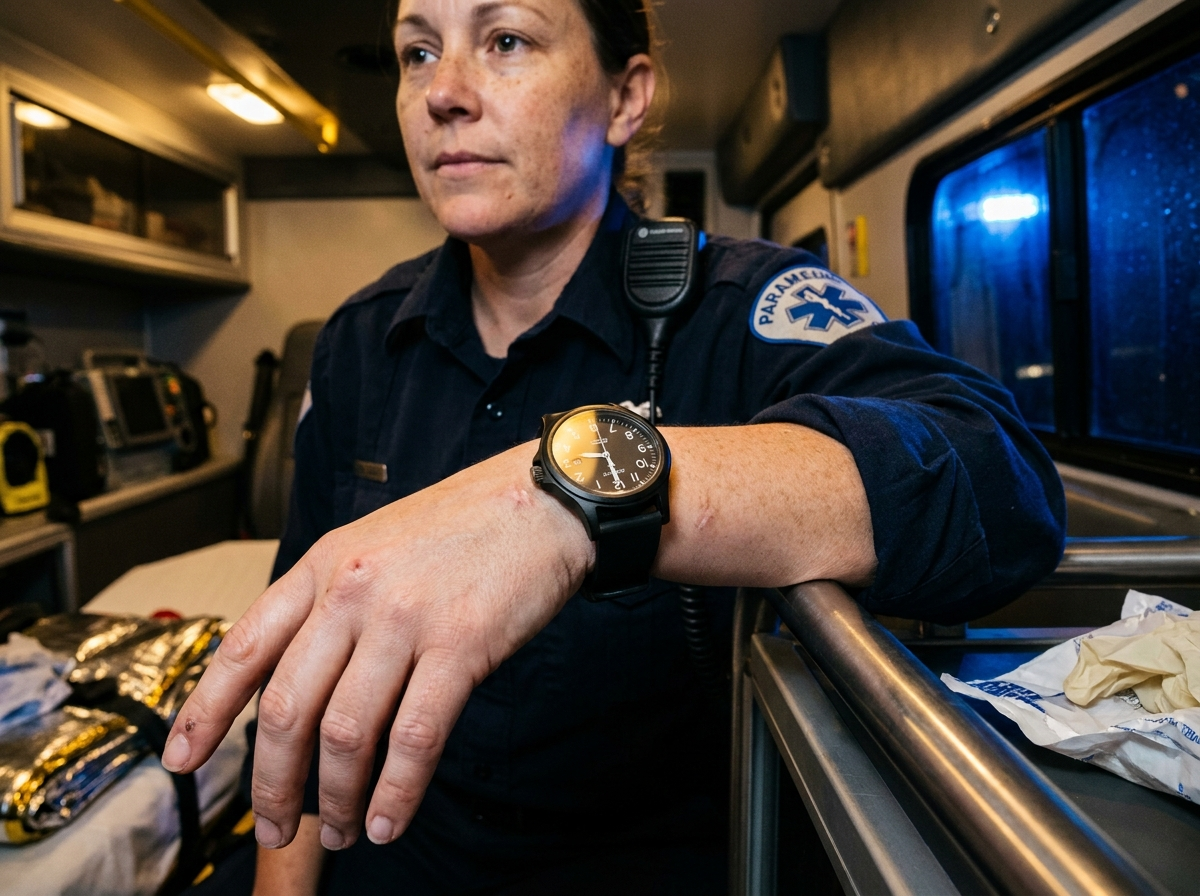
Anticoagulants do exactly what they are prescribed to do, which is prevent clotting. That is protective for stroke risk and it is the complication in a bleed. Treated as an ordinary knock, an anticoagulated bleed can keep going quietly while everyone involved is still being reassuring about it, including you.
It also changes where we drive. A head bleed on a thinner wants imaging and neurosurgery on site, which is not always the nearest hospital. Knowing you are anticoagulated can change the drug and the destination, and both of those are decided before anyone has found a relative.
👉 See the fix, which is smaller than you would expect →
It is not a device, and it is not a service. It is closer to something you already understand.
4. It is basically a name tag for emergencies.
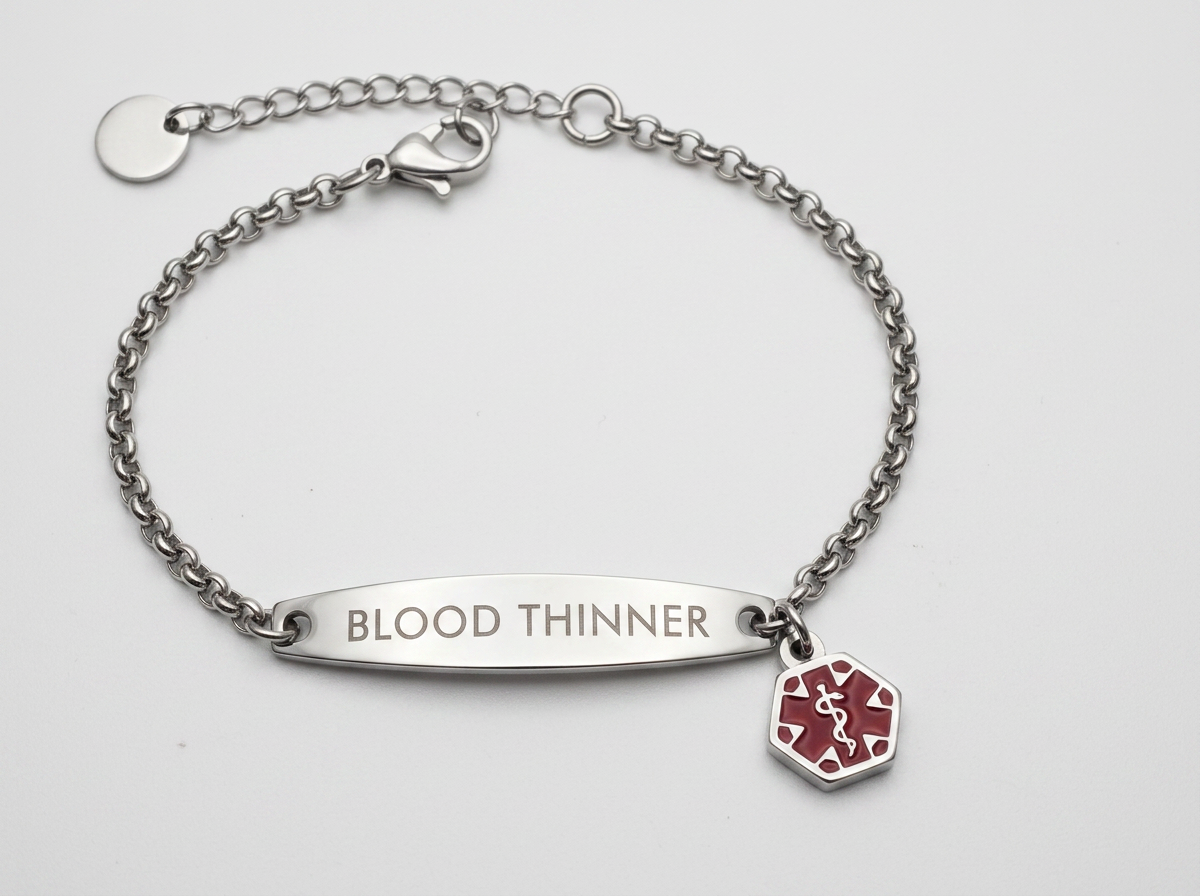
That is genuinely the whole idea. A name tag does not do anything clever. It does not connect, or monitor, or alert anyone. It simply makes sure that the person who needs to know something already knows it, without having to ask. This is that, for the one fact about you that changes emergency treatment.
Which is why it has no battery, no app, no signal and no account. There is nothing to charge, nothing to pair and nothing to renew. It is a piece of engraved surgical steel that is already in the right place. The unglamorous simplicity is the reliability, not a compromise on it.
👉 See what is engraved on it, and why →
Though what it says matters more than people assume, and most get it wrong.
A Name Tag For Emergencies
For the one minute you cannot introduce yourself.
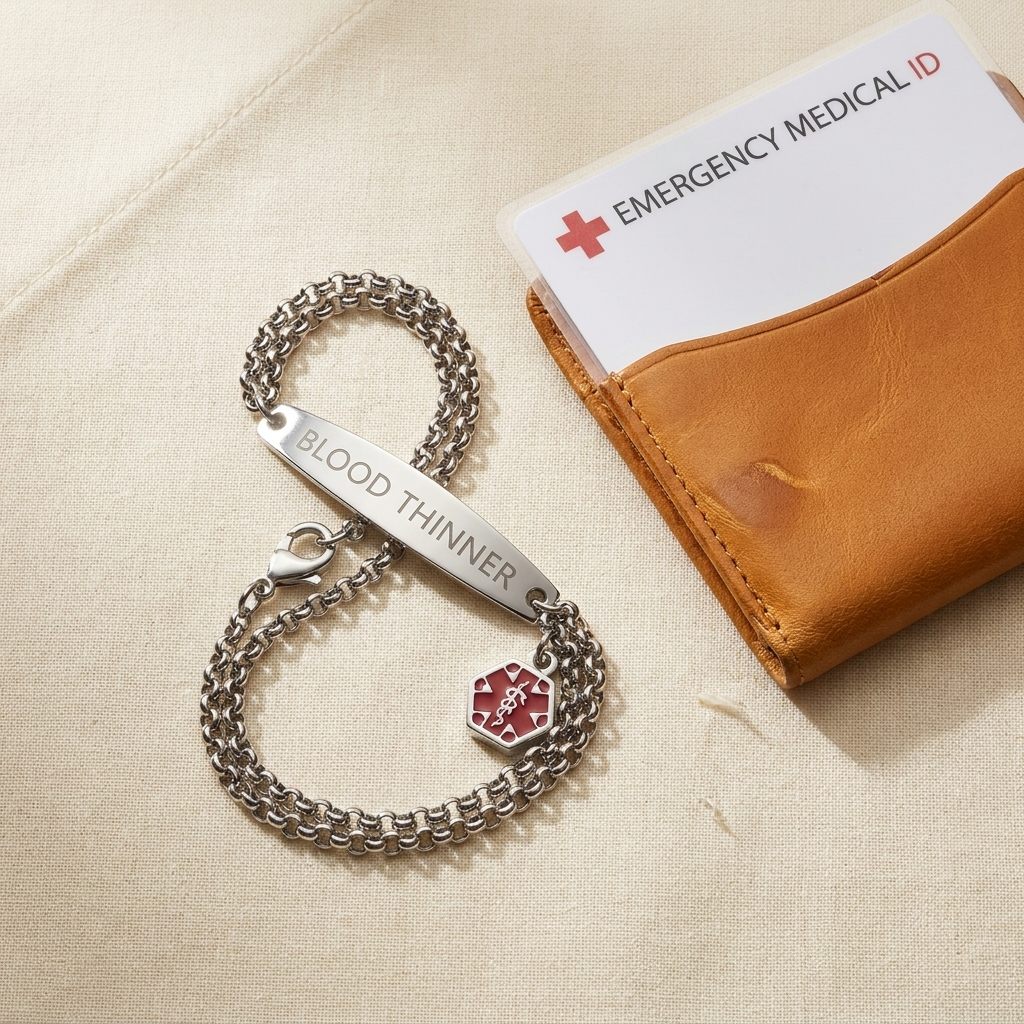
Surgical steel, engraved with the category rather than the brand, so it stays correct through every switch. $24.99, with the Emergency ID Card and case included free.
GET MY WRIST-CHECK BRACELET →5. It says the category, not the brand name.
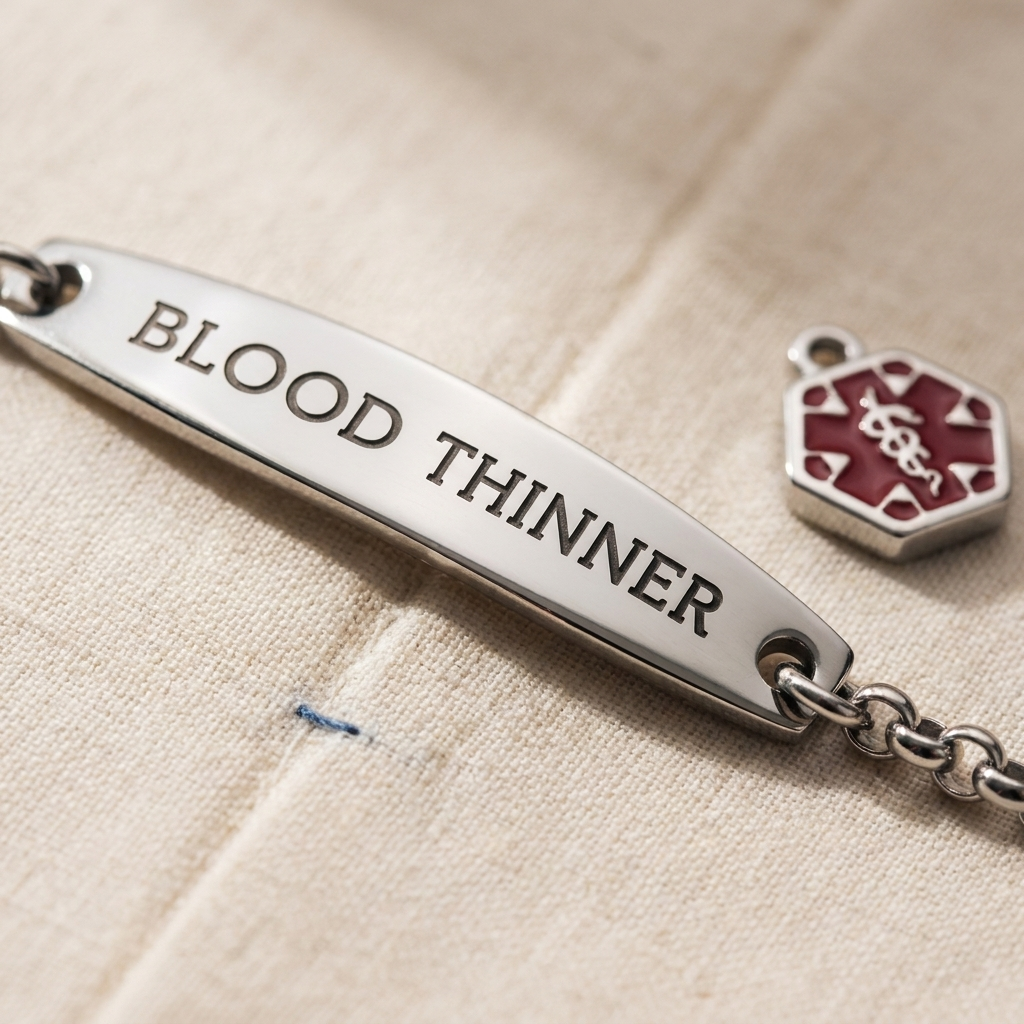
It is engraved BLOOD THINNER, not Eliquis. That looks like a downgrade and it is the opposite. Cardiologists move people between Eliquis, Xarelto, Warfarin, Pradaxa and Plavix for cost, for kidney function, for side effects. A bracelet engraved with a brand name becomes wrong the day your prescription changes, and nobody re-engraves it.
The category is also what actually changes our protocol. We are not selecting treatment off the specific molecule at the roadside; we are establishing that you are anticoagulated at all. Two words does that permanently. The specific drug goes on the Emergency ID Card in your purse, where it can be updated in seconds.
👉 See why it stays right for years →
Which matters most for the condition that gave you the prescription in the first place.
6. AFib never told you either.
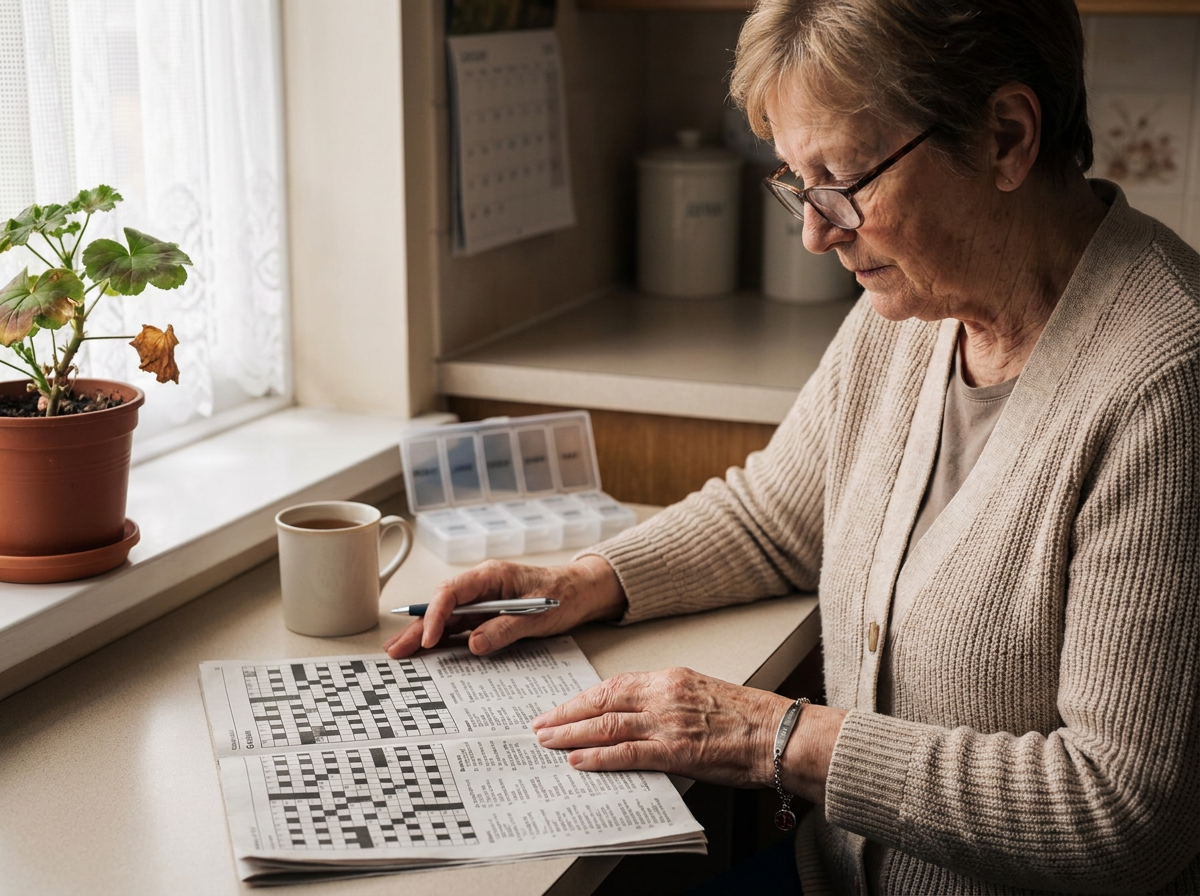
Atrial fibrillation is frequently silent. Plenty of women are diagnosed at a routine appointment, having felt entirely normal, and go on feeling entirely normal on treatment. That is a good outcome and it creates a specific trap: nothing in your body ever prompts you to prepare, because nothing in your body ever feels like a problem.
The women I have treated were not careless. They were well. They felt well that morning, they had felt well for years, and there was never a day that announced itself as the day to sort this out. The preparation has to be done on an ordinary Tuesday or it does not get done at all.
Which is the last thing worth saying, and it is mercifully short.
7. Ten seconds, once.
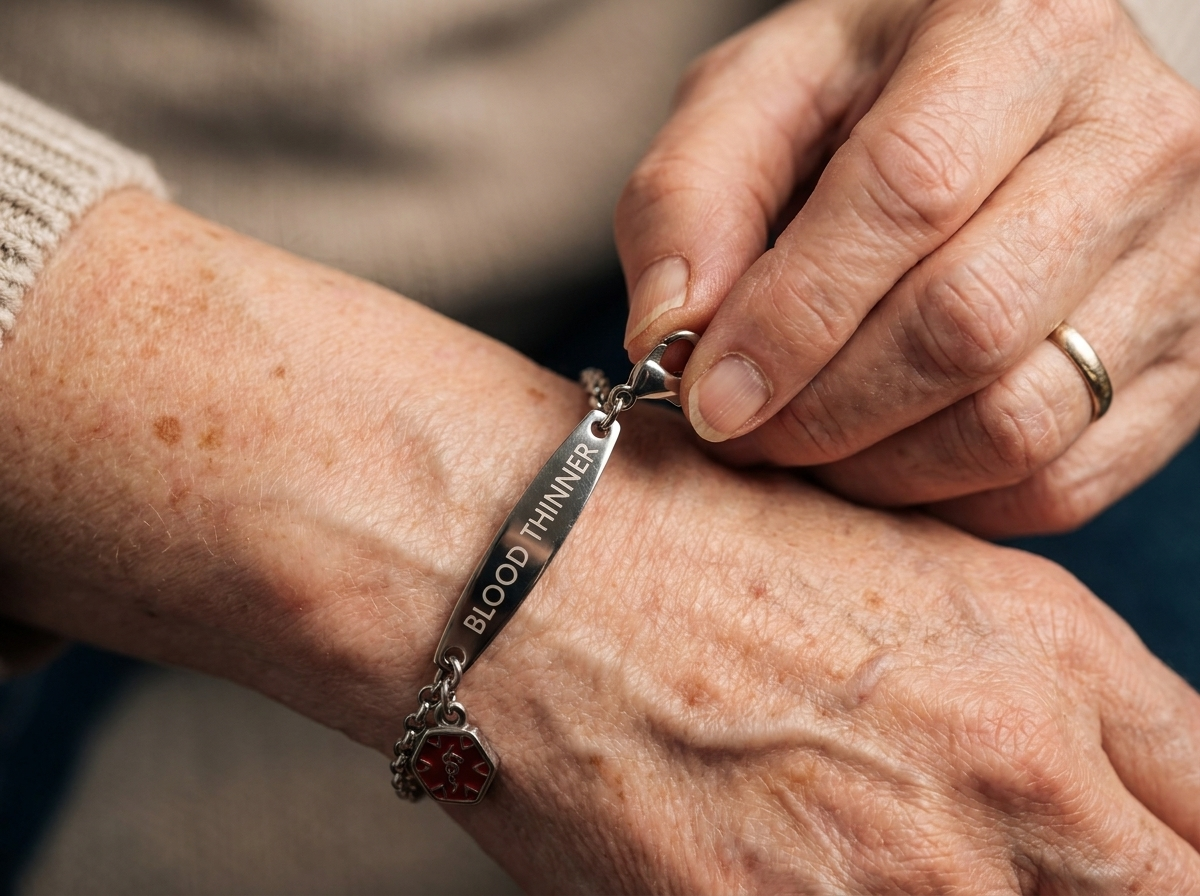
It takes about ten seconds to put on and then it is simply on. In the shower, in the garden, asleep, on the ordinary Tuesday and on the day that is not ordinary. There is no version of this where you forgot to charge it, or left it on the nightstand, or had not got round to setting it up.
That is the entire argument for a piece of steel over anything cleverer. It has one state. The only decision it ever asks of you is the one in front of you now, and after that it never asks again. Ten seconds, once, and the answer is on you from then on.
Nobody is going to ask you what you take. This answers before anyone thinks to.
Two Free Gifts. Zero Risk. One Wrist.
316L surgical steel, laser-etched with the category so it stays accurate through every switch. Ships with the Emergency ID Card for your specific drug and a protective case, both free.
Wear it for 60 days. If it is not right, send it back for every penny and keep both gifts. Lose it in the first year and it is replaced free, no questions and no proof required.
The engraving carries a lifetime warranty. No subscription, ever. This bracelet sold out six times last year.
Last Word
Flash Sale ends in 23:00
Nobody will ask. Make sure the answer is already there.
The one fact that changes the drug and the hospital, engraved where every crew already looks. Do it while your Flash Sale is still open.
GET PROTECTED TODAY →