If You're on a Blood Thinner, the Danger Was Never the Fall. It's the Five Minutes When Nobody Kneeling Over You Knows What's in Your Blood.
I am the person who arrives in those five minutes. Sixteen years of them.
Here is what almost nobody explains when they hand you the prescription: your body, or your mother's, has quietly changed its own rules, and the change matters most at the moment you cannot speak for yourself. On a blood thinner, the wrong first drug does not simply fail to help. It makes the bleed worse.
So the question is not whether help arrives. Help arrives, and fast. The question is whether they learn it from your body in the first sixty seconds, while the drug and the hospital are still being chosen, or from a wallet somebody finally thinks to open in the ER, long after both decisions are made.
If you are the one taking the pill, this is what I would tell you across a kitchen table. If you are the daughter who fills the Sunday pillbox, this is the thing nobody told you to ask about.

1. Every Pair of Hands Goes to the Wrist First
This is the part that surprises people, so I will say it plainly. When I reach someone who cannot answer me, my hands go to the wrist before anything else. Not because I am looking for jewelry. Because that is where the pulse is, and taking a pulse is the first reflex of the job. Every crew in the country is trained the same way: wrist, neck, chest.
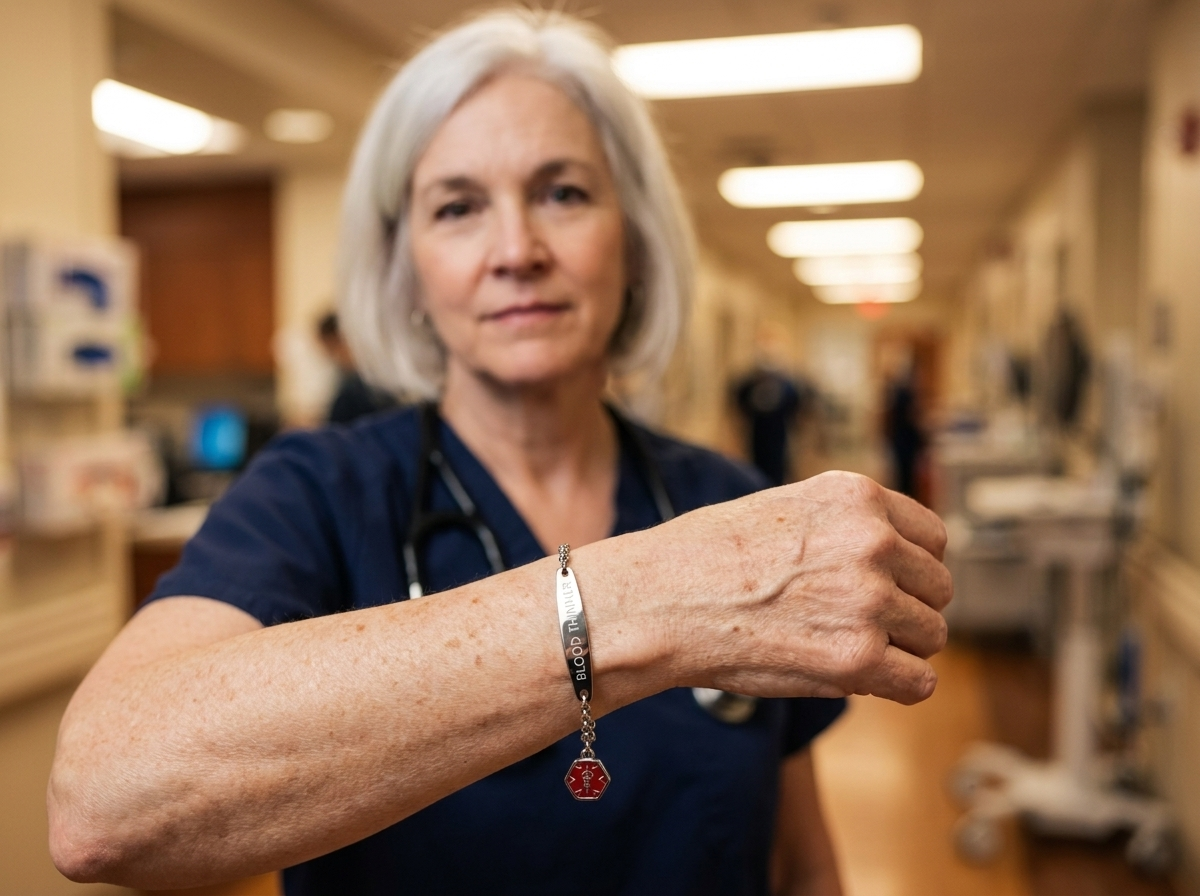
Which means the wrist is not a nice place to put information. It is the only place a stranger's hands are already going in the opening seconds. Two words engraved there, BLOOD THINNER, arrive in time for the first decision. Not the fifth.
2. Your Body Changed Its Rules and Nobody Sat You Down
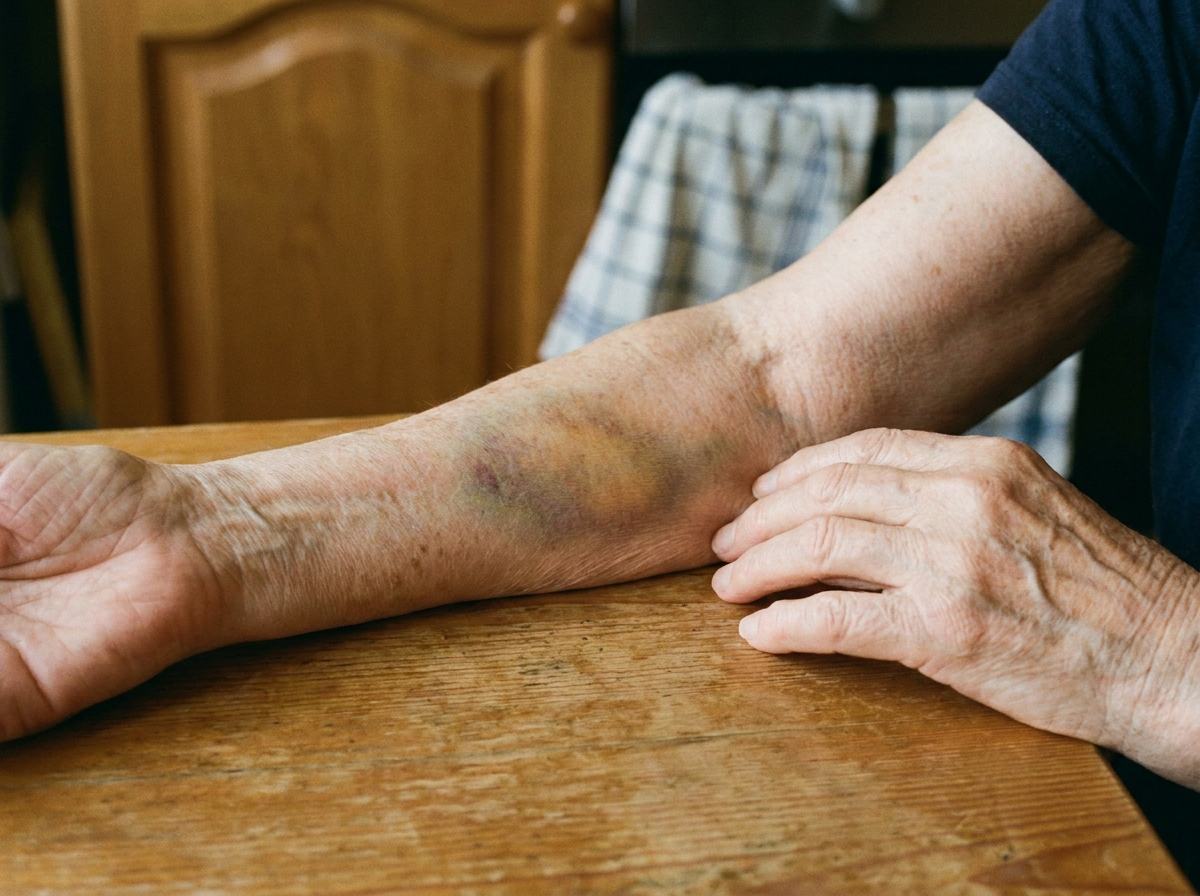
A bruise the size of a plum from a cupboard door you barely touched. A nick from a kitchen knife that will not quit, twenty minutes at the sink with a paper towel. Patients tell me about these almost apologetically, as if they have done something wrong.
They haven't. That is the medication working exactly as intended. But it is also your body telling you something true: it now does everything more easily, including the thing that happens after a fall. The bruises are not the danger. They are the receipt, proving how fast your blood moves now, in a place you can see. The danger is the same change happening somewhere you cannot see, on a day you cannot speak.
3. A Card Nobody Knows to Look For Is a Card Nobody Reads
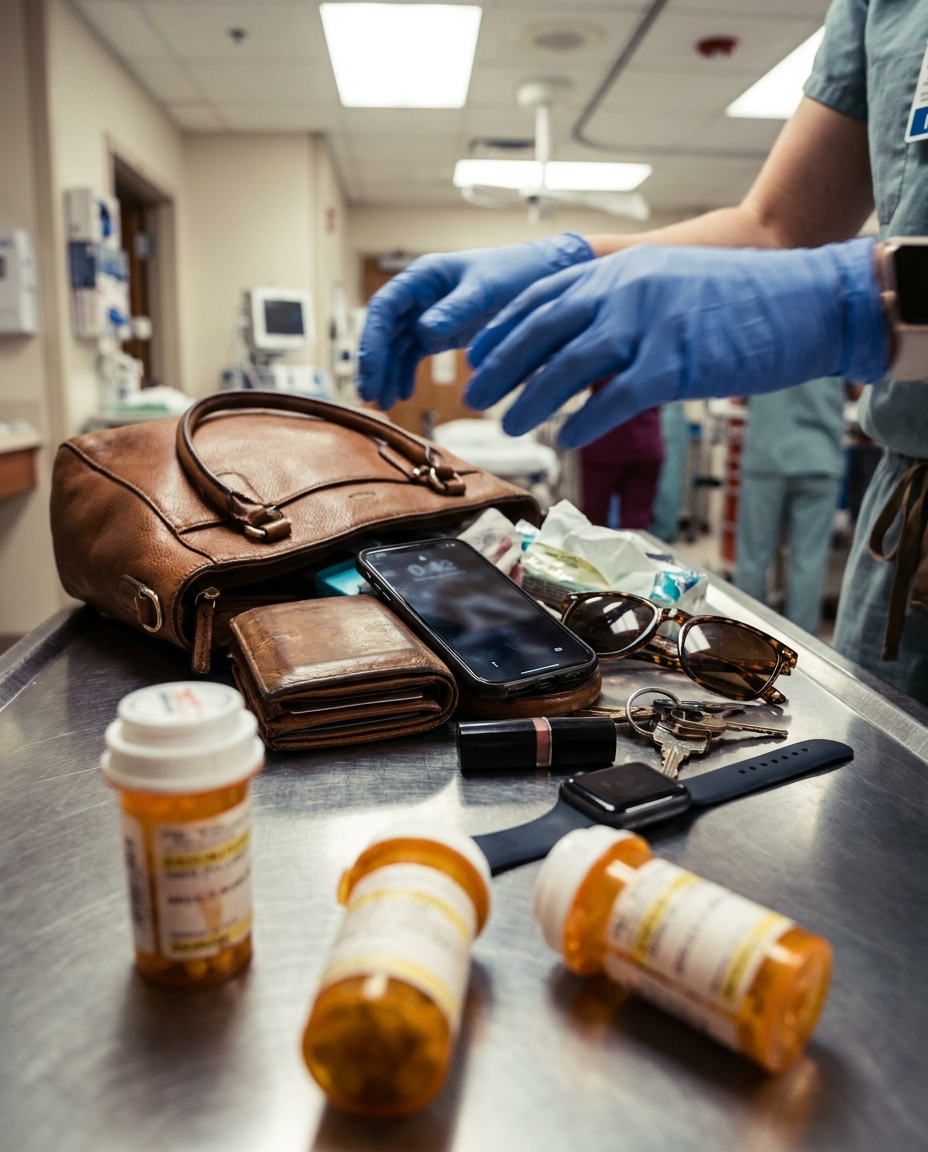
Almost everyone does this first, and it is the right instinct. You write it all down. Medication, dose, doctor, next of kin. It goes in the wallet, and for about a week you feel better. Then you have solved nothing. You have just made yourself feel busy.
Then picture it honestly. Your purse is on a store floor ten feet away while strangers work on you, or zipped shut in another room. We do not go through your bag in the first minutes. There is no time, and frankly it is not where we have been trained to look. They almost never do.
A colleague described a patient to me last year. Seventy-four, on Pradaxa for a mechanical valve. She tripped at a farmer's market and hit her head, and she was treated as a simple fall. By the time the ER understood what she was on, the bleed was inoperable. Her medication was on a printed card in her purse. Nobody opened the purse.
4. One Engraving Covers Every Blood Thinner
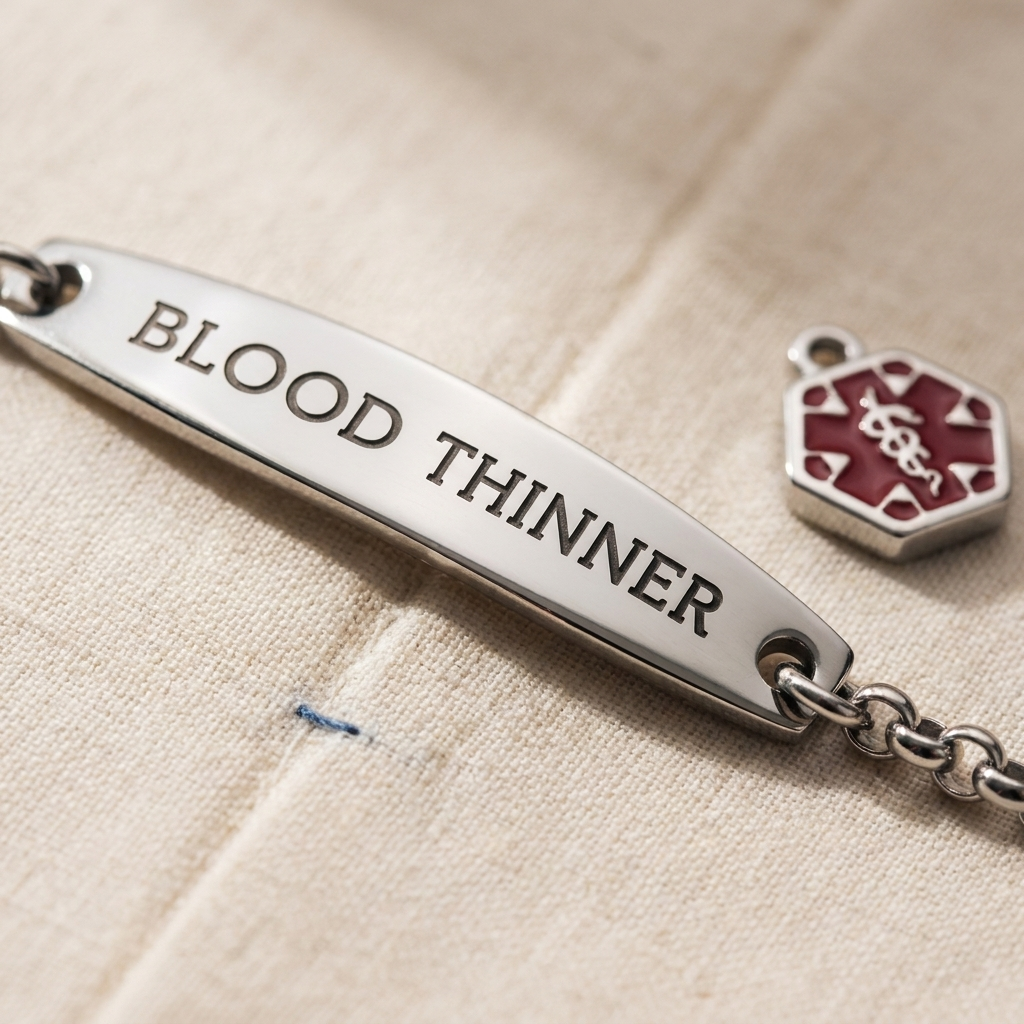
Your cardiologist will switch you, or hers will switch her. Eliquis to Xarelto for insurance. Xarelto to Warfarin for a valve. I've read engravings that were two prescriptions out of date. A bracelet engraved with a drug name becomes a lie the day your prescription changes.
This one is engraved with the category your body is in: BLOOD THINNER. To a trauma team, those two words mean one thing on first read: clotting is compromised, treat accordingly. It stays true through every switch. The free Emergency ID Card carries your specific medication and updates whenever your prescription does.
5. Slow Information Is No Use in a Fast Window

This is the sentence I most want you to take away, because it is the one that reorganizes everything else. All the answers people reach for are slow. The records. The phone calls. The daughter who knows the whole history, is doing everything right, and is simply four hours away. The card in the bag. All of it is real information, and all of it arrives after the window has closed.
Picture the worst version: a cabin at altitude, a stranger who happens to be a doctor, and sixty seconds. No chart. No pharmacy. No signal. Whatever is on your body is the entire medical record that exists in that moment. That is not an unusual scenario. That is every scene, everywhere, before help gets organized.
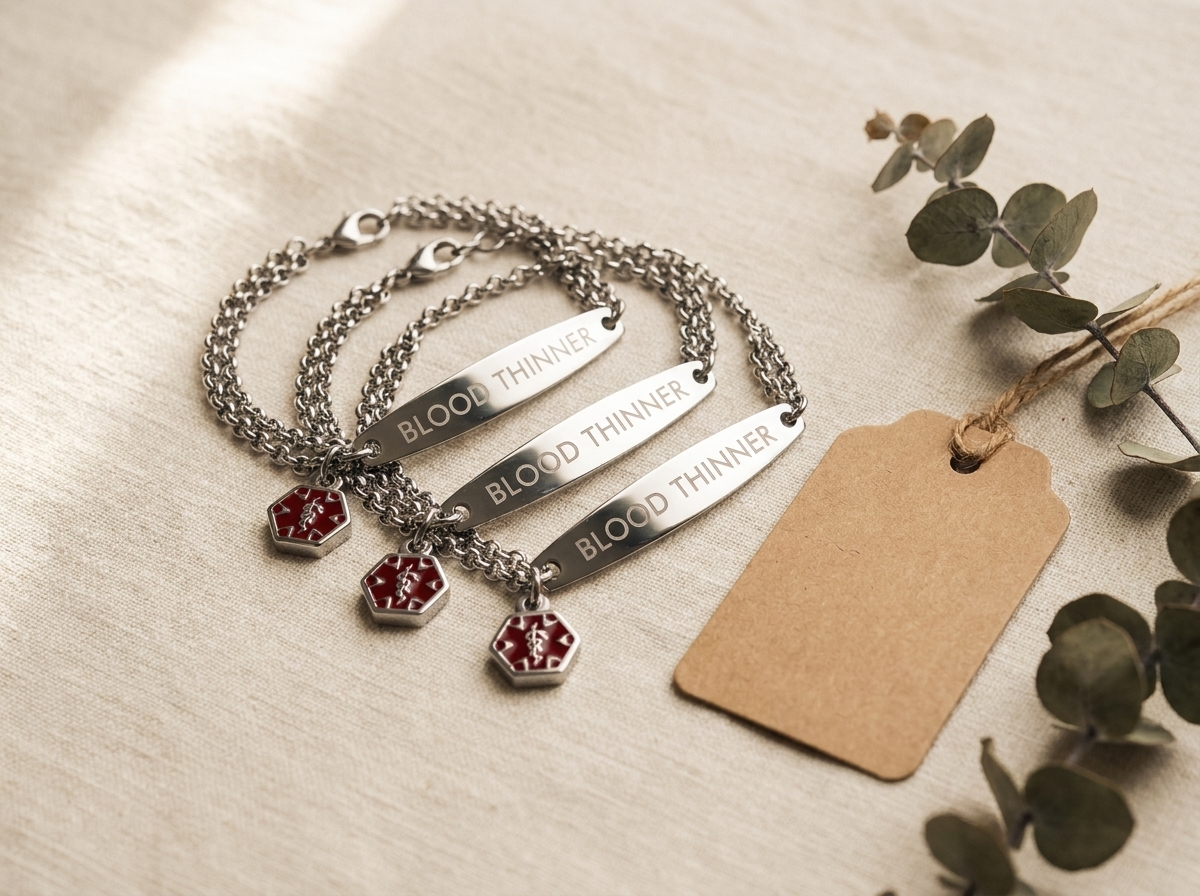
FLASH SALE: SAVE $15 + TWO FREE GIFTS
I have had this conversation at a lot of bedsides, always about five minutes too late to help. This is the version that arrives in time. 60-day guarantee, both gifts yours either way.
GET PROTECTED RISK-FREE →🛡️ Backed by the Lost-Bracelet Promise
Flash Sale →6. No Phone. No Password. No Battery.
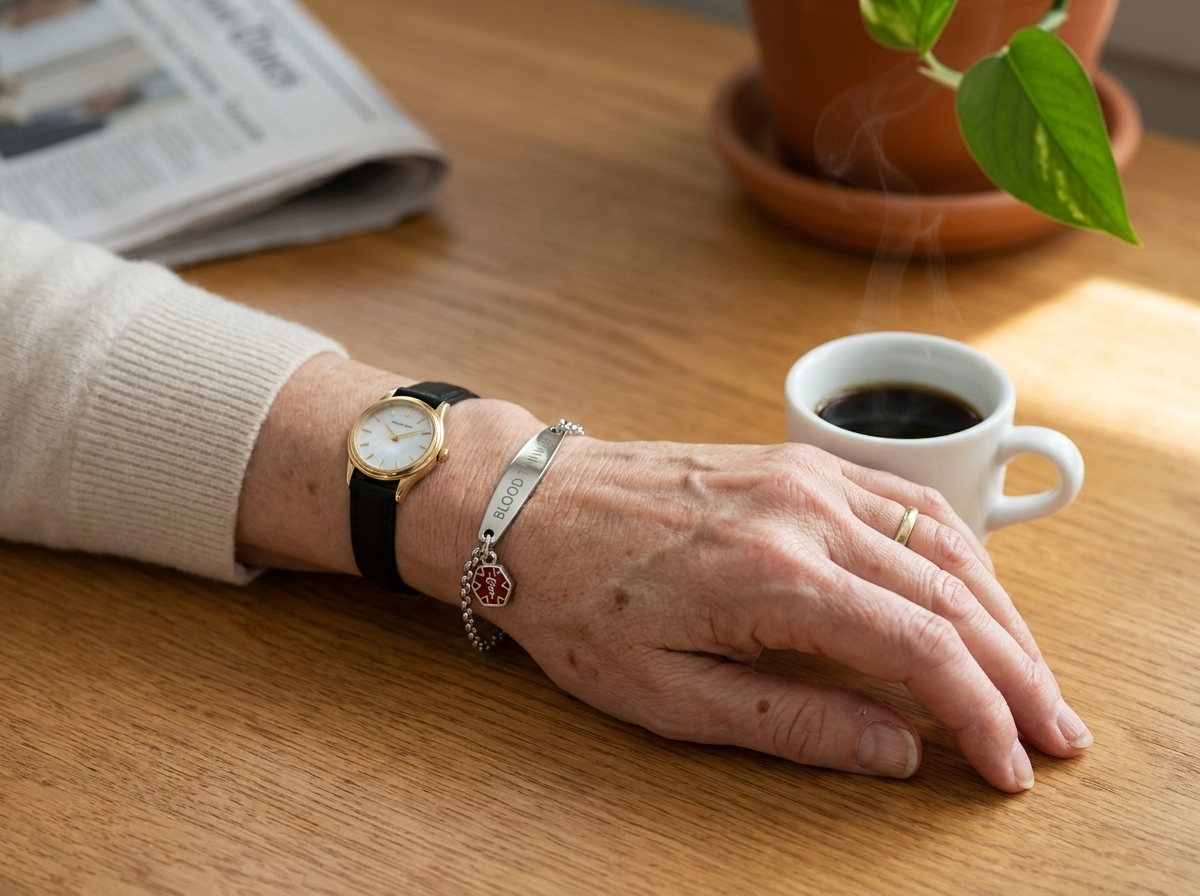
Every backup you are relying on tonight needs something from you. Your phone needs your face or your code. Your smartwatch reports a heart rate, not a medication. Your wallet needs to be found, opened, and read by someone with time to spare. At a scene, nobody has time to spare.
The bracelet asks for nothing. No charge, no signal, no subscription, no app. It worked the day it arrived and it will work identically ten years from now. I have never once been slowed down by a bracelet. I have been slowed down by every other thing on that list.
7. The Floor of an Empty Kitchen
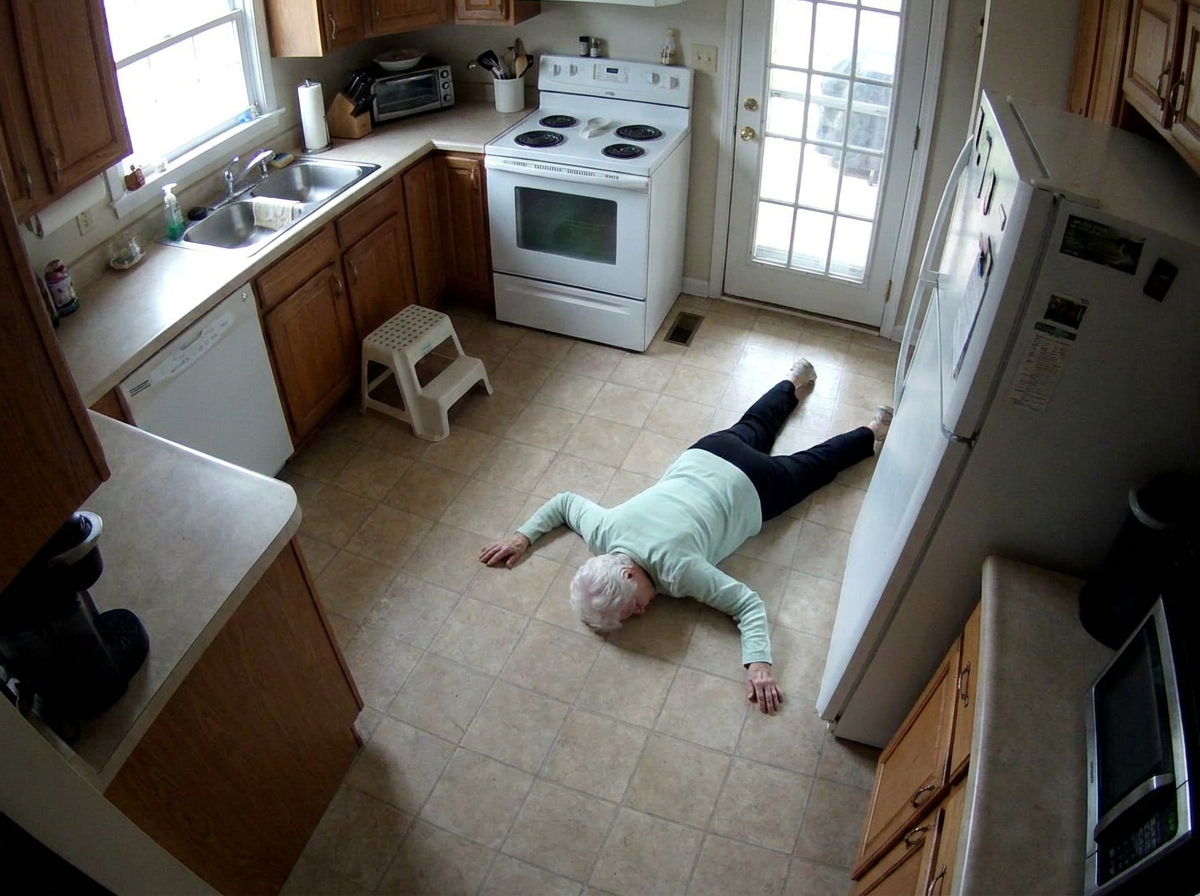
This is the scenario people describe to me most, usually in a lowered voice: going down somewhere ordinary, in an empty house, and not being awake to explain yourself. Or her not being awake to explain herself, with you four hours away. It is not a morbid thought. It is an accurate one. Most falls happen at home, on a normal morning, with nobody in the room.
Whoever arrives first will be a neighbor, a spouse, a crew, or all three in sequence. None of them can ask you anything. The bracelet does not need you conscious and does not need a witness. It is the one thing in the house still able to speak.
8. Recommended by the People Who Read Wrists for a Living
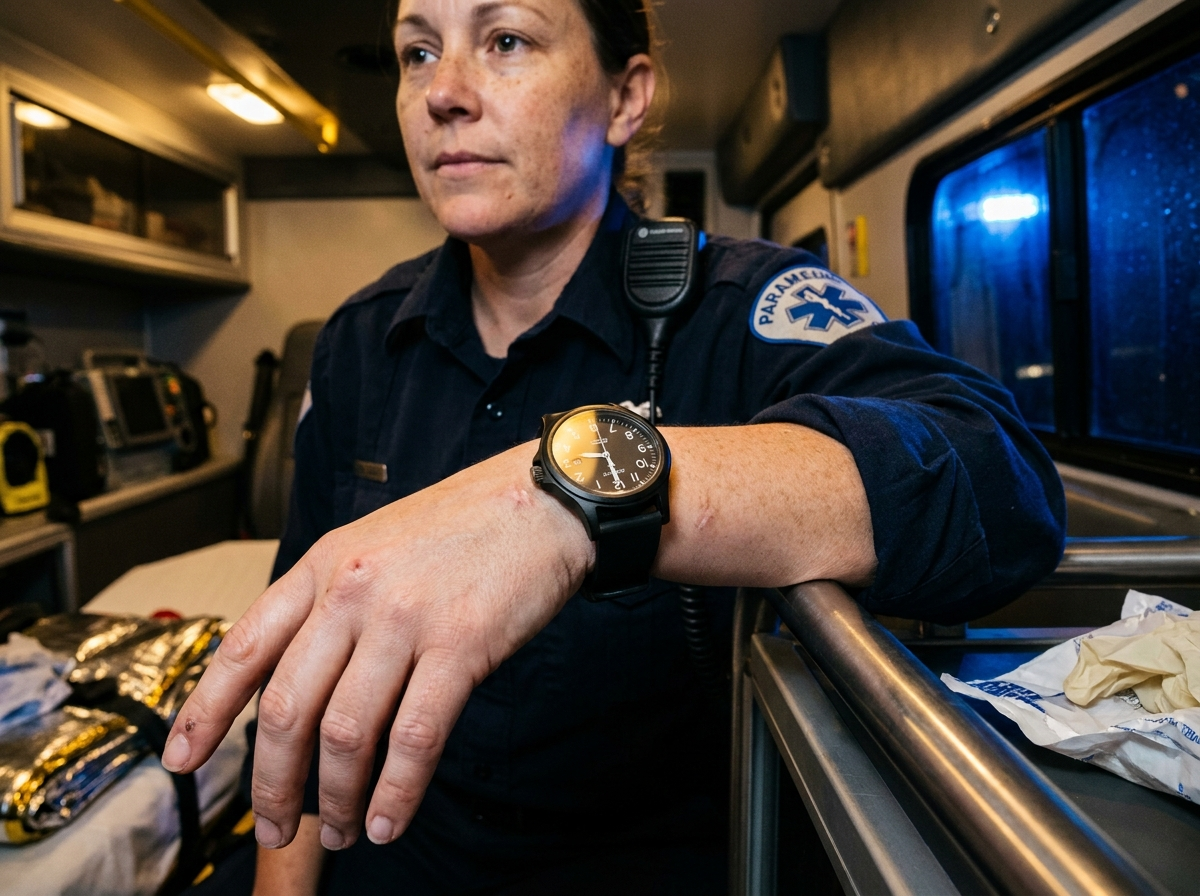
Don't take my word for it. Take the working crews'. A paramedic explained it on a professional forum without any product in mind: "the main reason we want to know about your blood thinner is because it changes which hospital we'll go to if you have what looks to be a 'minor' injury."
The right hospital. The right first drug. The right treatment priority. All of it hangs on one read. When the people who respond to these calls for a living tell you where they look, that is a professional opinion worth listening to. More than 17,000 women have already put it where we look.
9. If You Are the Daughter Reading This
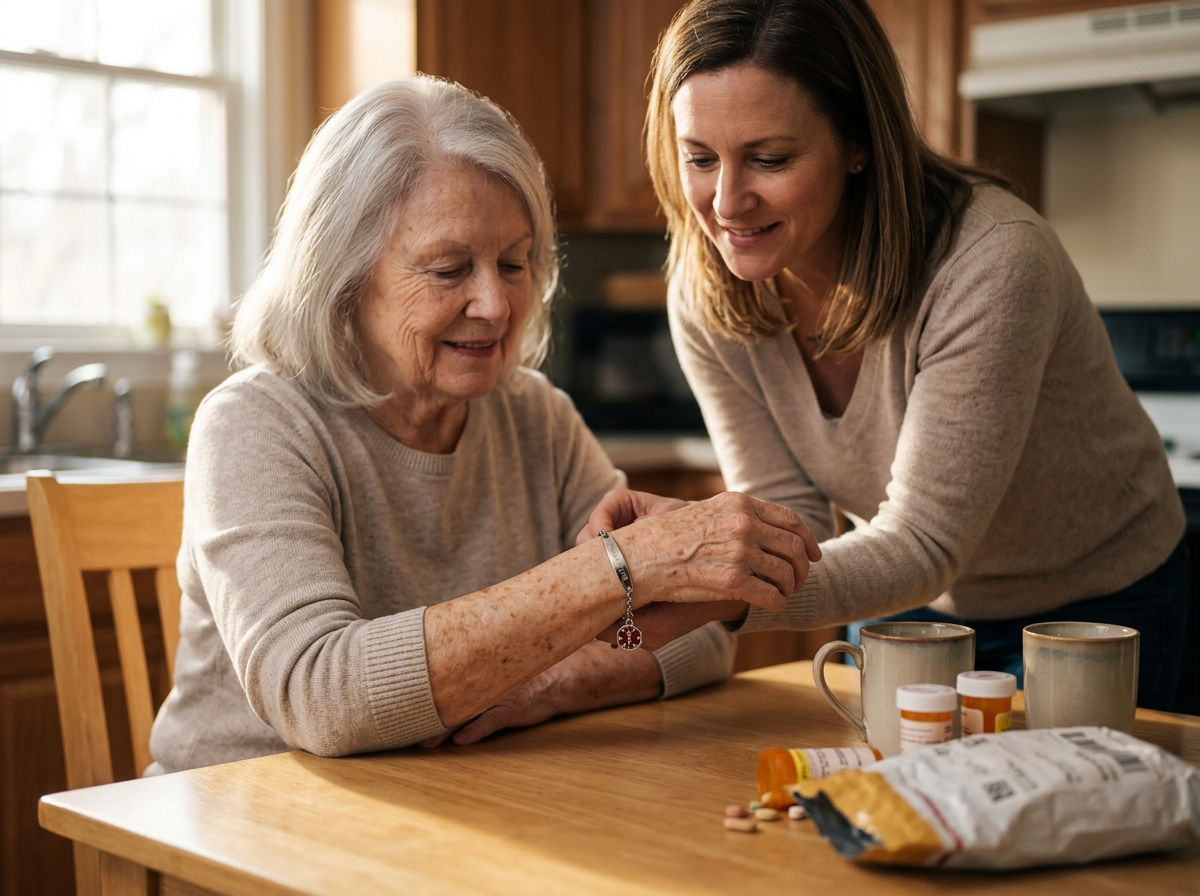
Some of you are not the patient. You are the one who fills the Sunday pillbox, and you have watched what happens to a woman who gets told no often enough. Grandmothers who went from teaching you to make pie crusts to being allowed to sit in a chair. You do not want to do that to your mother. Good. Do not.
I have watched daughters apologize to their mothers for buying one of these. It is the wrong instinct. Understand what this actually is: it is not a monitor and it is not a leash. It does not track her, call anyone, or ask her once a day whether she has fallen. It lets her keep driving, keep gardening, keep flying to see you, and it simply makes sure that if something happens, the people who reach her are not working blind. Daughters buy a great many of these. Almost none of them regret it.
10. You Should Not Have to Rent Being Identifiable
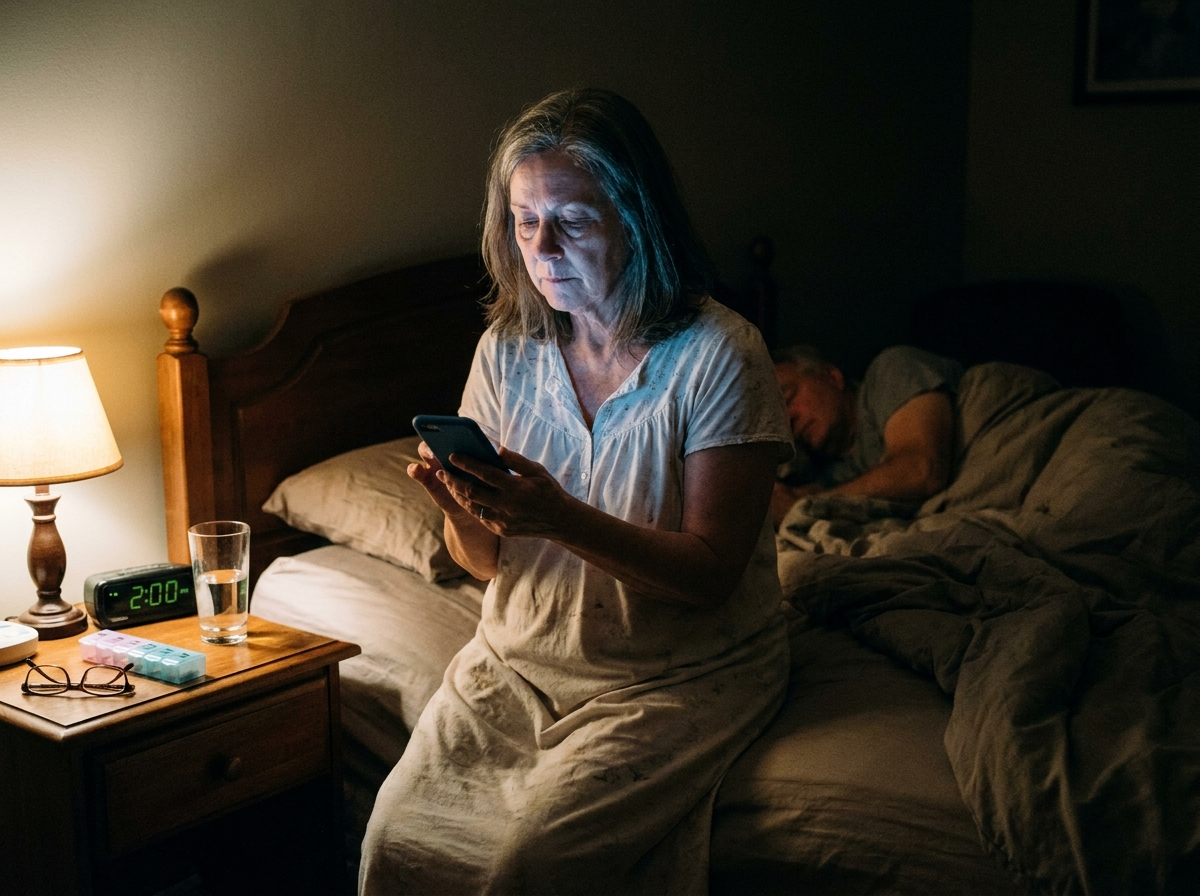
This is where most people stall, and I understand why. The well-known medical bracelet arrives with a monthly fee, an annual renewal, and a phone call required to ever stop it. Paying every year, forever, for the privilege of being identified. Plenty of my patients get that far, look at the arrangement, and quietly close the laptop. Then they lie awake at 1:47 in the morning doing the same arithmetic they were doing before.
So here is the whole offer, plainly. $24.99, once. For you or for her. Surgical steel, laser-etched, BLOOD THINNER in letters readable across a room, with the Star of Life a crew is trained to clock on sight. No membership. No renewal. No app. It comes with two things included: the Emergency ID Card carrying the specific drug and dose, and a slim leather case for it. If the bracelet is lost in the first year we replace it free.
What it buys is not really steel. It is the end of the arithmetic, because the thing you were turning over has finally been answered.
Help arrives. That was never the question. The question is whether the people who arrive know what you are on in the minutes that decide everything.
You can put that fact where they will find it first.
SAVE $15 + TWO FREE GIFTS
This is the bracelet I tell my own mother to wear. 60-day guarantee, and both gifts are yours either way.
GET PROTECTED RISK-FREE →🛡️ Backed by the Lost-Bracelet Promise
YES! PROTECT ME →"If you're on blood thinners, you wear one. It's not optional."