10 Reasons Your Blood Thinner Could Kill You Without Two Words on Your Wrist
Your cardiologist put you on a blood thinner to save your life. They were right to do it. But they did not tell you what happens when you fall and nobody around you knows what is in your blood.
I am an emergency physician. Sixteen years in trauma. I have watched the same scene play out hundreds of times: a woman arrives by ambulance, unconscious, and the crew has already started treatment based on what they can see. Which is nothing.
The next sixty seconds decide everything. And the one thing that could change the outcome is the one thing almost nobody wears. Here are 10 reasons I made this.

1. A Fall on Blood Thinners Is Not a Normal Fall

When you are not on a blood thinner, a fall is a bruise. Maybe a fracture. Your body clots, the bleeding stops, and you recover.
When you ARE on a blood thinner, a fall is a different event entirely. The drug that prevents your clot also prevents your body from stopping a bleed. A bump to the head that would bruise a healthy person can become a subdural hemorrhage in a patient on Eliquis or Xarelto.
The fall is not what kills you. What happens in the next sixty seconds is.
2. The Bleed Starts Before Anyone Knows What Is in Your Blood

Here is what most patients do not understand about their own medication.
A blood thinner does not thin your blood. It suppresses your clotting factors. That means when a bleed starts, inside or outside, your body cannot do what it was designed to do: stop it.
And the person who finds you on the floor, the neighbor, the spouse, the paramedic crew, has no idea this is happening unless something tells them. Your blood looks the same. Your skin looks the same. The bleed is invisible until it is not.
3. Sixty Seconds. That Is the Whole Window.
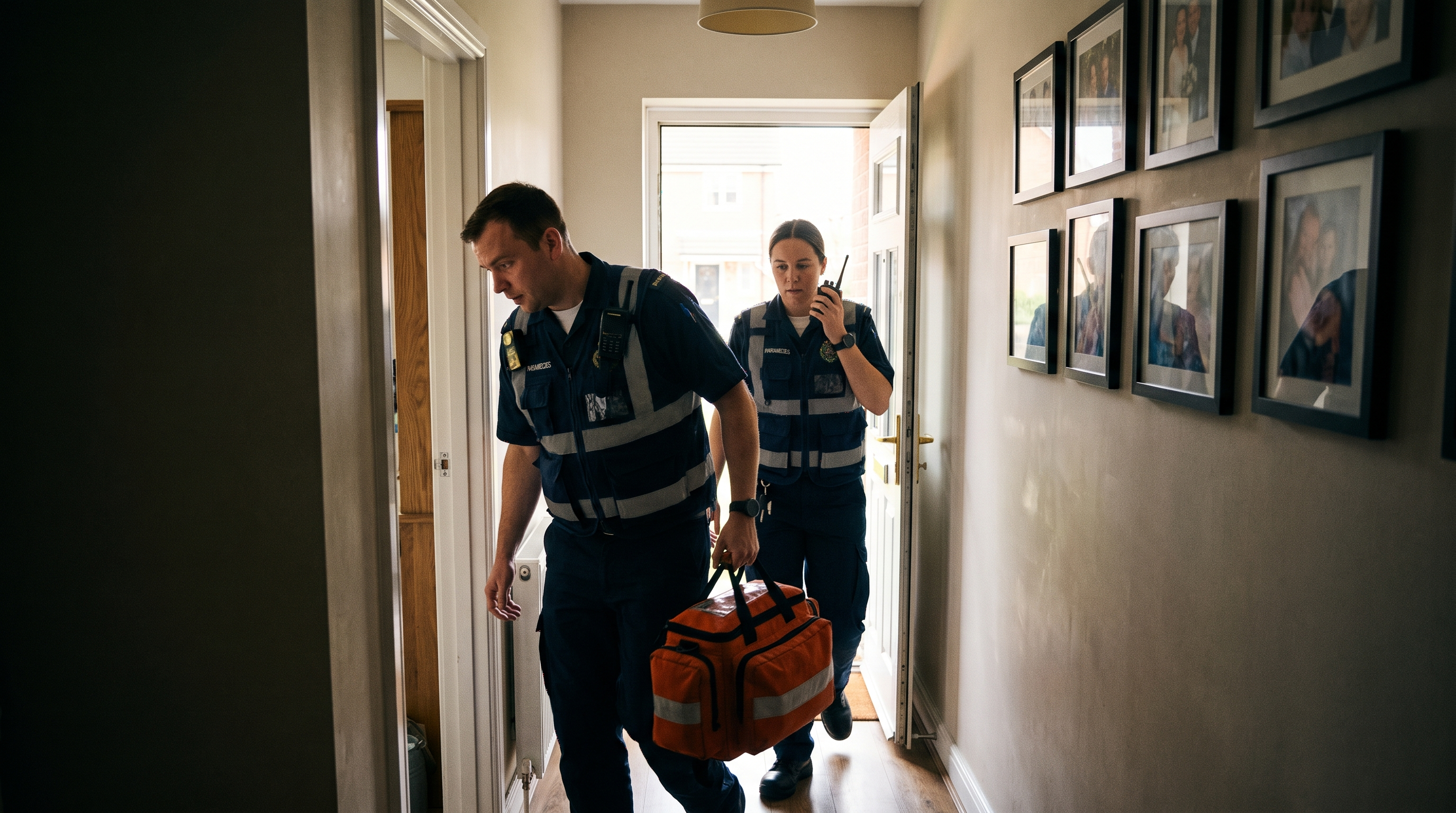
When paramedics arrive, the clock is already running. The first drug decision happens before your name is confirmed, before your chart is pulled, before anyone opens your purse.
If we know you are on a blood thinner, we reach for the reversal agent. The one that saves you.
If we do not know, we reach for a standard protocol. And on a blood thinner patient, that protocol can accelerate the bleed you are already losing.
Sixty seconds. That is the difference between the right call and the wrong one. And in those sixty seconds, you are not speaking.
4. Every Paramedic Runs the Same First Move. It Is Called the Wrist Check.
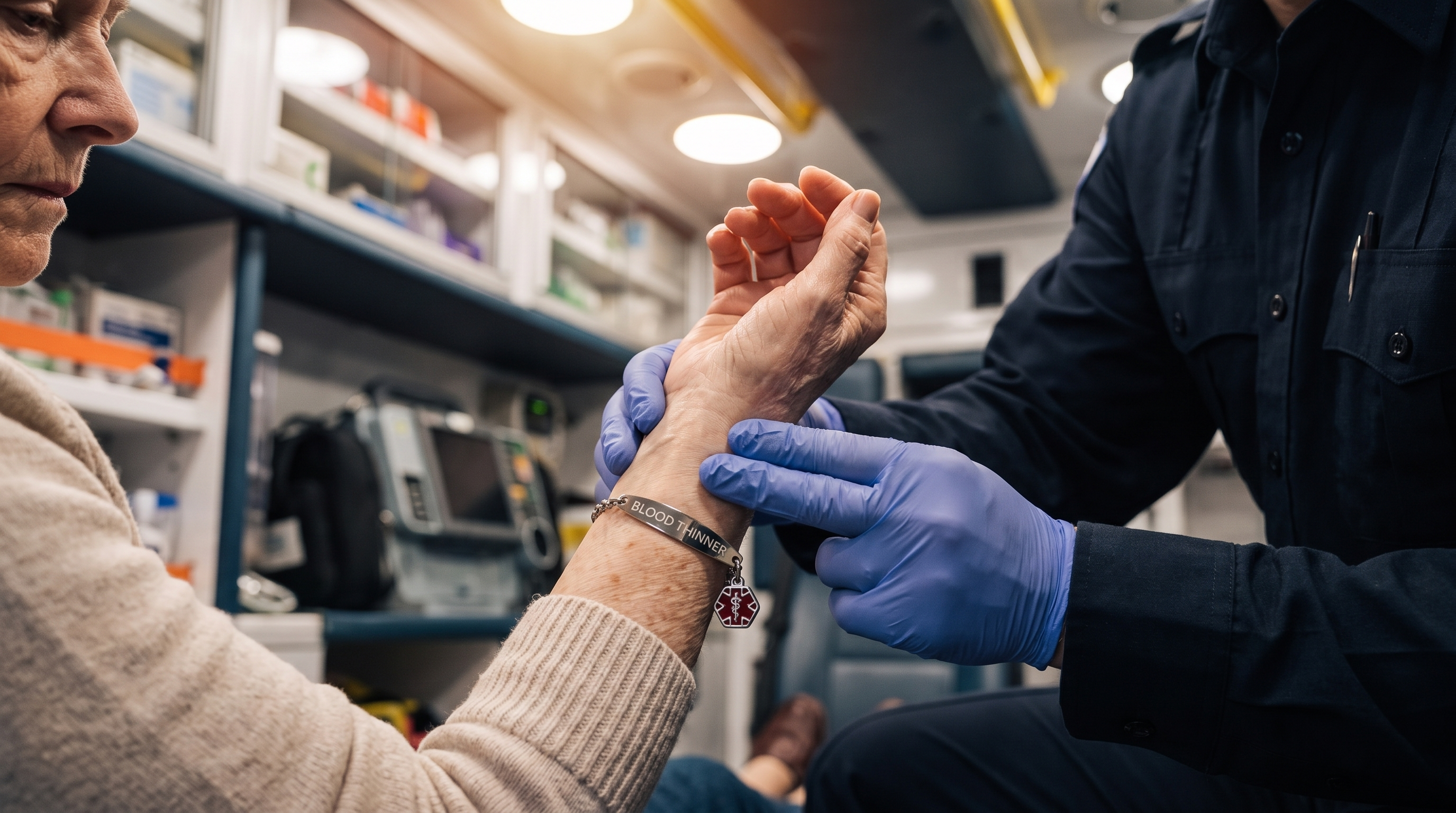
Before the pulse. Before your name. Before we even open your eyes.
Every paramedic in the country runs the same move when they reach a patient: they check the wrist. It is the first thing our hands touch.
That is where this bracelet sits. Surgical steel. Two words engraved deep enough to read in the dark: BLOOD THINNER.
The moment I see it, the entire protocol changes. The IV changes. The drug changes. The hospital I take you to changes. Two words, and your daughter answers a different phone call.
5. Your Phone Is Locked. Your Wallet Is in the Other Room.
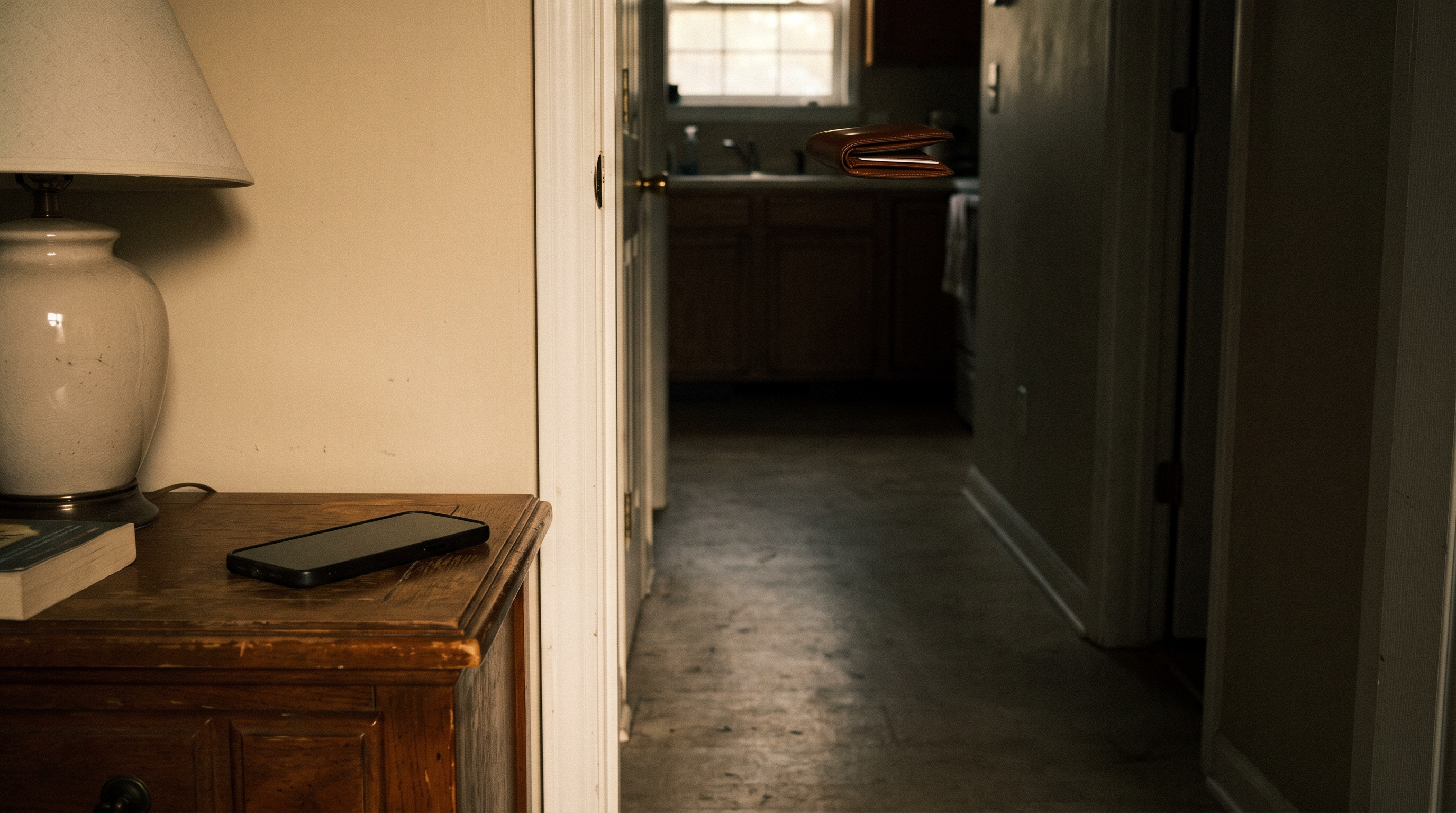
I hear this constantly: "I have a card in my wallet." "It is in my phone." "My Apple Watch has my medical info."
Your phone is locked on the nightstand. Your wallet is in the other room. Your Apple Watch tells me your heart rate, not the drug that just turned a survivable fall into a brain bleed you do not come back from.
None of those things work when you are unconscious on the floor. The only thing that works is the thing already on your body, in the place I already check.

6. The Wrong Drug Does Not Just Fail. It Makes the Bleed Worse.

This is the part your cardiologist did not explain.
When a trauma team does not know you are on a blood thinner, they treat you like every other patient. Standard fluids. Standard medications. Standard protocols.
But you are not every other patient. The standard clotting agents do not work on suppressed clotting factors. And some of the drugs we reach for in a standard trauma response can thin your blood further.
The wrong drug does not just fail. It accelerates the thing that is killing you. That is what iatrogenic harm means: the treatment itself made it worse.
7. It Works Face Down on the Kitchen Floor.

I want you to picture this.
You are on the kitchen floor. You hit the corner of the counter on the way down. You cannot speak. You cannot move. You cannot reach the phone that is charging two rooms away.
The paramedics arrive in ninety seconds. They do not know your name. They do not know your doctor. They do not know what medications you take.
But they grab your wrist. And they see it. Two words in surgical steel. And the call they make next is the one that saves your life, not the one that ends it.
8. It Looks Like Jewelry. Not a Hospital Bracelet.
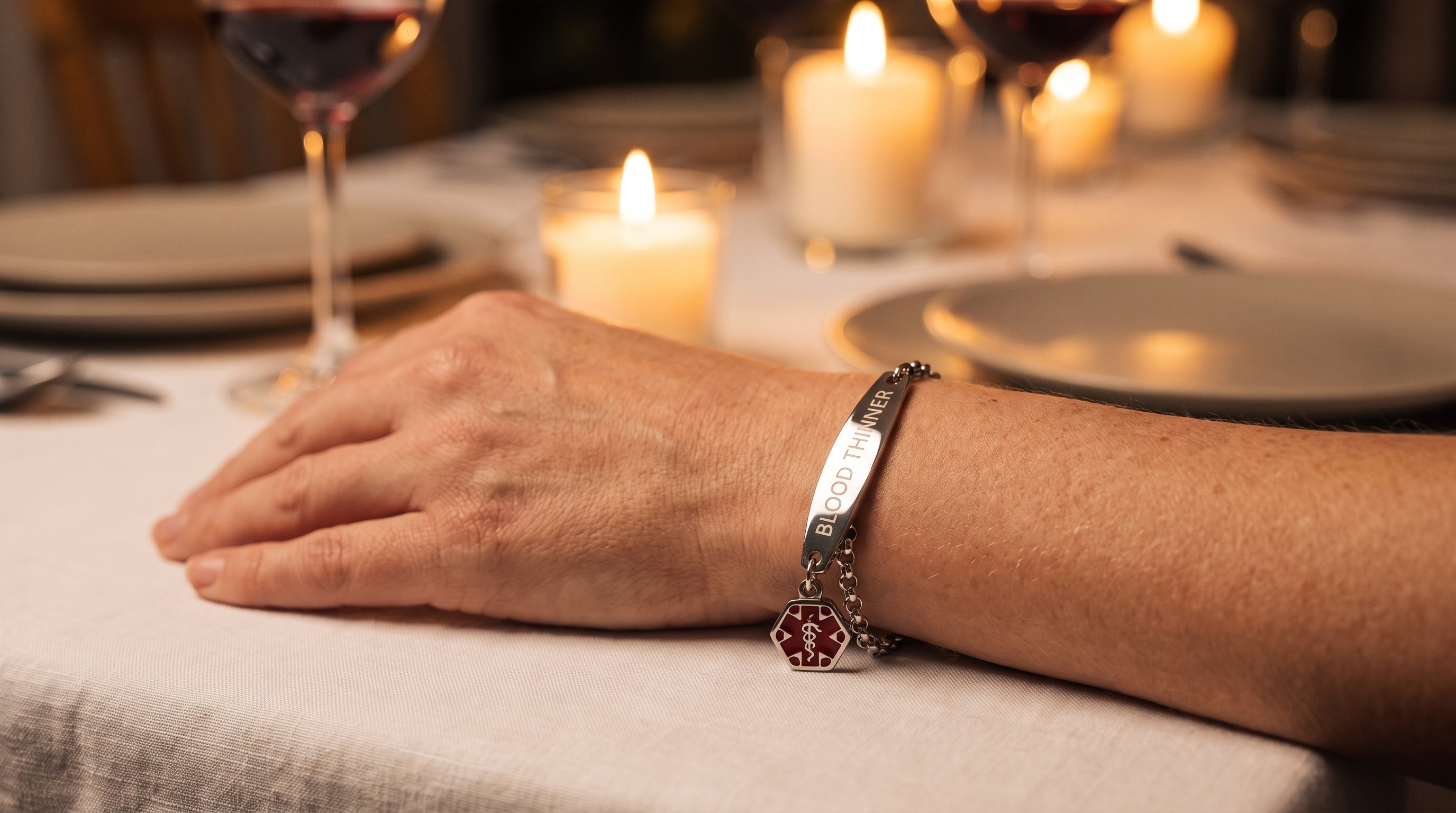
I know why you have not worn a medical ID before.
The ones you have seen look clinical. Rubber. Plastic. Red. They announce to every person in the room that something is wrong with you. And you do not want that, because nothing is wrong with you. You take a medication. That is it.
This bracelet is surgical steel with a polished plate and a chain that drapes like jewelry. Women wear it to dinner, to church, to the grocery store. Two people complimented it this week. Neither one knew what it was.
9. Seventeen Thousand Women Already Wear One.

Every one of them is on a blood thinner for life. Eliquis. Xarelto. Warfarin. Pradaxa. Every one of them made the same calculation you are making right now.
One of them wrote to us at eighty-three, living alone. She said what all of them say: "I need something to speak for me when I am alone."
Seventeen thousand women who take the same drug you take, who live the same life you live, who made one small decision that changed the math on what happens when they fall.
10. Your Daughter Answers a Different Phone Call.

There are two phone calls your daughter could get.
The first one starts with "Your mother had a fall and we are not sure what happened." That call leads to a trauma center, a ventilator, and a room where nobody can tell her what went wrong because nobody knew what was in your blood.
The second one starts with "Your mother had a fall, but the crew saw her bracelet and made the right call." That call leads to a recovery room and a ride home.
The bracelet is the difference between those two calls.


 LINDA M. AND +17,000 WOMEN